
Key Highlights
Here are the main takeaways for keeping your vacation home pool in top shape:
- Maintaining balanced pool water chemistry is vital to protect swimmers and your pool’s surfaces.
- Ideal chemical levels include a pH of 7.4-7.6 and free chlorine between 2.0-4.0 ppm.
- Neglecting water chemistry can cause eye irritation, algae growth, and damage to pool equipment.
- Regular water testing, even with infrequent use, is crucial to catch imbalances early.
- Using a pool chemical chart helps you add the correct amount of pool chemicals every time.
- Automated systems and slow-dissolving sanitizers can simplify pool maintenance between visits.
Introduction
Owning a vacation home with a swimming pool is a dream, but keeping it ready for fun can be a challenge, especially with infrequent use. The key to a sparkling, safe pool is mastering its water chemistry. When a pool sits unused, its chemical balance can quickly go awry, leading to problems that can be costly and time-consuming to fix. This guide will walk you through simple tips to maintain perfect pool chemistry and water quality, ensuring your oasis is always ready when you are.
Understanding Pool Water Chemistry for Vacation Homes
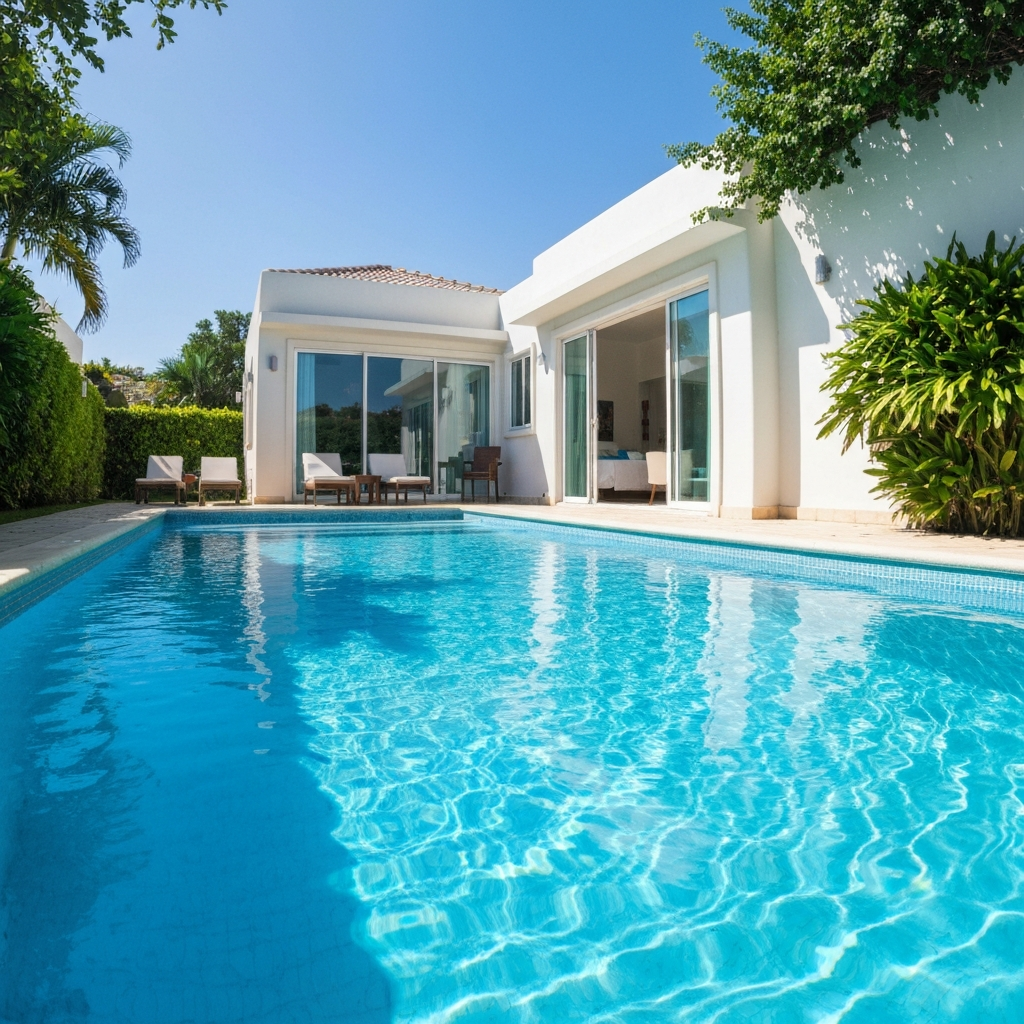
Proper pool water chemistry is about more than just clear water; it’s about creating a safe and stable environment. For vacation home pool owners, understanding the basics is essential because the pool doesn’t get the regular attention it might otherwise.
Even without swimmers, environmental factors like rain, sun, and debris affect the water. A good pool filter and balanced chemicals work together to keep the water clean. Let’s look at why this balance is so important in a pool you don’t use every day.
Why Balanced Water Chemistry Matters in Infrequent Use Pools
When your pool isn’t used often, you might think it needs less attention. However, the opposite is often true. Proper water chemistry is crucial for preventing long-term damage and ensuring the pool is safe whenever you arrive for a visit. Without regular pool maintenance, the water balance can drift, creating a corrosive or scale-forming environment.
This imbalance can harm your pool walls, liners, and expensive pool equipment like heaters and pumps. For example, water with a low pH can become acidic and etch plaster surfaces. At Del Rancho Pools, we know that protecting your investment is a top priority, especially for a luxury pool design.
Maintaining the right water chemistry from the start prevents these issues. It ensures that when you’re ready for a swim, your pool is ready for you, without the need for intensive cleaning or repairs. This proactive approach is the best way to manage a pool with infrequent use.
Common Issues from Neglecting Water Chemistry
Ignoring your pool’s water chemistry can lead to several noticeable and unpleasant problems. If you return to your vacation home to find a green, cloudy mess, it’s a clear sign that the chemical balance is off. Low chlorine levels are a primary cause, as they allow algae and bacteria to thrive.
This not only looks bad but is also unsafe for swimming. Unbalanced water can cause uncomfortable physical reactions like skin and eye irritation. A pH level that is too high or too low is often the culprit behind that stinging sensation swimmers sometimes feel.
Beyond swimmer comfort, poor water chemistry can cause lasting damage. Some common issues include:
- Stains and scale buildup on the pool surface and tiles.
- Corrosion of ladders, railings, and internal parts of your pool heater.
- Cloudy water that is difficult and costly to clear up. Regular water testing can help you avoid these headaches.
Essential Chemicals for Safe and Clean Pool Water
To keep your pool water safe, clean, and balanced, you need a few key pool chemicals. The most important job is sanitization, which kills harmful bacteria and prevents algae growth. This is typically handled by chlorine or bromine, which must be maintained at a consistent level.
Beyond sanitizers, you’ll need chemicals to manage the pH, total alkalinity, and calcium hardness. These elements work together to ensure the sanitizer is effective and to protect your pool surfaces from damage. Understanding these essential chemicals is the first step toward easy pool care.
Chlorine and Bromine for Sanitization
Chlorine is the most common sanitizer for swimming pools. When you add it to water, it becomes “free chlorine,” the active form that kills germs. The goal of your pool maintenance is to keep a steady free chlorine level. For vacation homes, using stabilized chlorine tablets (trichlor) can be a great option, as they dissolve slowly and protect the chlorine from being burned off by the sun.
Bromine is another effective sanitizer, used more often in spas and hot tubs but also suitable for pools. A key difference is that combined bromine remains an active sanitizer, unlike combined chlorine, which can cause irritation. To measure your bromine level with a chlorine test, you simply multiply the result by 2.25.
Whether you use chlorine or bromine, you’ll eventually need to “shock” the pool. This involves adding a large dose of a chemical like sodium hypochlorite or calcium hypochlorite to break down contaminants and restore the sanitizer’s effectiveness.
pH and Total Alkalinity Control
The pH level of your pool water measures how acidic or basic it is. The ideal range is between 7.4 and 7.6, which is comfortable for swimmers and helps protect your equipment. If the pH is too low (acidic), it can cause corrosion. If it’s too high (basic), it can lead to scale formation and reduce chlorine’s effectiveness.
Total alkalinity (TA) acts as a buffer for your pH. Think of it as an anchor that prevents the pH level from swinging wildly. Having too little TA makes the pH erratic, while too much TA makes the pH resistant to change. The ideal range for total alkalinity is usually between 80 and 120 ppm.
To adjust these levels, you’ll use chemicals like a pH increaser (soda ash) to raise pH or a pH decreaser (sodium bisulfate or muriatic acid) to lower it. Similarly, an alkalinity increaser will raise TA. Always adjust total alkalinity first, as it will help stabilize the pH.
Calcium Hardness and Cyanuric Acid in Vacation Pools
Calcium hardness refers to the amount of dissolved calcium in your pool water. It’s an important factor in overall water balance, especially for plaster pools. If the calcium hardness is too low, the water can become corrosive and pull calcium from plaster surfaces, causing etching. If it’s too high, it leads to cloudy water and scaly deposits on your pool surface and equipment.
The ideal range for calcium hardness is 200–400 ppm. To raise it, you can add calcium chloride. If the level is too high, the only way to lower it is by partially draining the pool and adding fresh water with lower hardness.
Cyanuric acid (CYA), also known as chlorine stabilizer, protects chlorine from being destroyed by the sun’s UV rays. For outdoor pools, a CYA level of 30–50 ppm is recommended. Stabilized chlorine tablets contain cyanuric acid, so levels will rise over time. If CYA gets too high, it can reduce chlorine’s effectiveness, and dilution with fresh water is the solution.
Ideal Chemical Ranges for Pool Water
Knowing the ideal levels for your pool’s water chemistry is the secret to easy and effective maintenance. When all your chemical levels are within their target ranges, the water is considered “balanced.” This means it’s safe for swimmers, comfortable to be in, and non-damaging to your pool and its equipment.
Maintaining this water balance is especially important for a vacation home pool that sits unused for periods. We’ll now break down the specific ideal ranges for the most important chemicals you need to monitor.
Recommended Levels for Chlorine and Bromine
For proper sanitization, your free chlorine level should always be within a specific ideal range. This ensures there is enough active sanitizer to kill bacteria and algae but not so much that it causes irritation. The recommended range for a standard chlorine pool is typically between 2.0 and 4.0 parts per million (ppm).
If you use bromine as your sanitizer, the target range is similar. You’ll want to keep the bromine level between 2.0 and 4.0 ppm to ensure the water is clean and safe for everyone. Falling below these ranges leaves your pool vulnerable to contamination.
Here is a quick reference table for the ideal sanitizer ranges in your pool water.
| Chemical | Ideal Range (ppm) |
|---|---|
| Free Chlorine | 2.0 – 4.0 ppm |
| Total Chlorine | 2.0 – 4.0 ppm |
| Bromine | 2.0 – 4.0 ppm |
Target Ranges for pH, Alkalinity, and Calcium Hardness
Beyond sanitizers, three other chemical levels are critical for balanced water: pH, total alkalinity, and calcium hardness. The ideal pH level for swimmer comfort and equipment protection is between 7.4 and 7.6. This slightly basic level prevents both corrosion and scaling.
Total alkalinity should be kept between 80 and 120 ppm. This range provides a good buffer to keep your pH level stable. If your alkalinity is correct, your pH will be much easier to manage. This is why you should always test and adjust alkalinity before trying to correct the pH.
Finally, the calcium hardness level should be between 200 and 400 ppm. Maintaining proper hardness levels protects plaster surfaces from etching and prevents scale from forming inside your pipes and on equipment. Keeping these three factors in their ideal range is key to long-term pool health.
Differences in Saltwater vs. Chlorine Pool Requirements
Many people think saltwater pools are chlorine-free, but that’s a common misconception. Saltwater pools use a salt chlorine generator to convert salt (sodium chloride) into chlorine right in the pool. This provides a steady, consistent stream of sanitizer without you having to manually add chlorine pucks or liquid.
The water chemistry requirements for saltwater pools are very similar to traditional chlorine pools. You still need to monitor and balance pH, total alkalinity, calcium hardness, and cyanuric acid. However, there is one major difference: the salt level itself.
Here’s what makes saltwater pools unique:
- You must maintain a specific salt concentration, typically 2,500–3,500 ppm, for the salt chlorine generator to work correctly.
- The generator produces chlorine, so you are still testing for free chlorine levels, not salt.
- Phosphates can coat the plates of the generator, reducing its efficiency, so it’s important to test for and remove them.
Steps to Test and Monitor Pool Chemistry During Infrequent Use
Even when you’re not at your vacation home, regular water testing is the only way to know what’s happening in your pool. Monitoring the chemical levels allows you to make small adjustments before they become big problems. Luckily, testing pool water is easier than ever.
With the right tools, you can quickly get a snapshot of your water chemistry. Using a pool chemical chart to track your results makes the process even simpler. Let’s explore some easy testing methods and how to use charts for quick reference.
Easy Pool Water Testing Methods for Homeowners
You don’t need to be a chemist to perform accurate water testing. There are several user-friendly methods available for homeowners. The most popular and simplest option is using test strips. You just dip a strip into the pool water, wait a few seconds, and compare the colored pads to the chart on the bottle.
For more precise readings, you can use a liquid test kit. These kits involve adding drops of reagents to a water sample and watching for a color change. While they require a bit more effort, they are often more accurate than strips for key readings like pH and free chlorine.
Digital readers offer the highest level of accuracy and convenience. These handheld devices measure the water quality electronically and display the results on a screen. Many can even connect to an app on your mobile device. Regardless of the method you choose, the key is to test consistently. Popular testing options include:
- Multi-parameter test strips
- Liquid reagent test kits
- Digital water testers
Using Pool Chemical Charts for Quick Reference
Once you’ve tested your water, what’s next? This is where a pool chemical chart becomes your best friend. A dosage chart tells you exactly how much of a chemical to add to your pool based on its volume and your test results. This takes the guesswork out of balancing your water.
Instead of just guessing how much pH increaser or alkalinity increaser to add, you can consult a chart for an accurate dose. This prevents you from over-correcting, which can send your chemical levels on a rollercoaster and waste chemicals. It’s a fantastic tool for easy reference.
You can find charts for all the most common chemicals, including chlorine shock, pH adjusters, and calcium hardness increaser. Many pool owners keep a laminated copy near their pool equipment or save a digital version on their mobile device for quick access while working on the pool.
Tips for Maintaining Proper Pool Chemistry with Infrequent Use
Maintaining a swimming pool at a vacation home you visit infrequently requires a smart and consistent pool maintenance plan. The goal is to keep the water chemistry stable between your visits so you don’t arrive to a green, cloudy surprise. A little preparation goes a long way.
With the right routine, you can ensure your pool stays clean and balanced with minimal effort. This involves knowing how often to check your pool, using the right products, and having a simple checklist to follow when you are away.
How Often to Check and Adjust Pool Chemicals
For a pool with infrequent use, the frequency of water testing is key. Ideally, you or a trusted neighbor should test the water at least once a week. This allows you to catch and correct any issues like low chlorine levels or a high pH before they escalate.
If you’re away for an extended period, it’s wise to prepare the pool before you leave. Ensure all chemical levels are in their ideal range, and consider using a slow-dissolving chlorine floater or tablets in the skimmer to provide a steady supply of sanitizer.
Here’s a simple weekly checklist:
- Test and adjust free chlorine and pH levels.
- Check total alkalinity once a week and adjust as needed.
- Once a month, test for calcium hardness and cyanuric acid. This routine helps prevent major swings in water chemistry and keeps maintenance manageable.
Simple Maintenance Routines When Away from Your Vacation Home
A simple routine can make all the difference in keeping your vacation home pool pristine. Before you leave, make sure your pool equipment is in good working order. Set your pump timer to run for at least 8-12 hours a day to ensure proper circulation and filtration through the pool filter. A clean pool surface is also easier to manage, so skim any leaves or debris.
Consider using a quality pool cover. This not only keeps debris out but also reduces water evaporation and slows down how quickly the sun burns off chlorine. It’s a simple step that significantly cuts down on maintenance. Many backyard pool ideas now incorporate automated covers for ultimate convenience.
Before departing, it is a good idea to pool shock the water, especially if it has seen heavy use. This will eliminate contaminants and give your sanitizer a fresh start. For those with a luxury pool from a custom pool builder San Diego or those thinking about pool remodeling San Diego, investing in an automated chemical controller can handle these tasks for you, providing peace of mind.
Conclusion
Maintaining ideal pool water chemistry in your vacation home is crucial for ensuring a safe and enjoyable swimming experience. By understanding the importance of balanced water chemistry, recognizing common issues from neglect, and following the recommended chemical ranges, you can prevent costly repairs and ensure your pool remains inviting. Regular testing and maintenance routines are essential, even during infrequent use, to keep the water clear and healthy. Remember, a well-maintained pool not only enhances your enjoyment but also adds value to your property. If you have any questions or need assistance in managing your pool’s chemistry, don’t hesitate to get in touch!
Frequently Asked Questions
Can I leave my vacation home pool untreated for weeks?
It is not recommended to leave your pool water untreated for weeks. Without regular pool maintenance, the chlorine level will drop to zero, allowing algae and bacteria to grow rapidly. This can lead to stained surfaces and equipment damage, creating a bigger and more expensive problem to fix later.
What is the simplest way to keep water balanced between visits?
The easiest way to maintain water balance is to use slow-dissolving pool chemicals and a pool cover. Regularly test the pool chemistry with test strips before you leave, ensure all levels are ideal, and use a floater with chlorine tablets to provide continuous sanitization while you are away.
Are chemical requirements different for spas or hot tubs at vacation homes?
Yes, the chemical requirements for spas and hot tubs can be different. Due to the higher water temperature, bromine is often preferred over chlorine as it is more stable. The smaller volume of water also means chemical levels can change very quickly, so more frequent testing is necessary.