
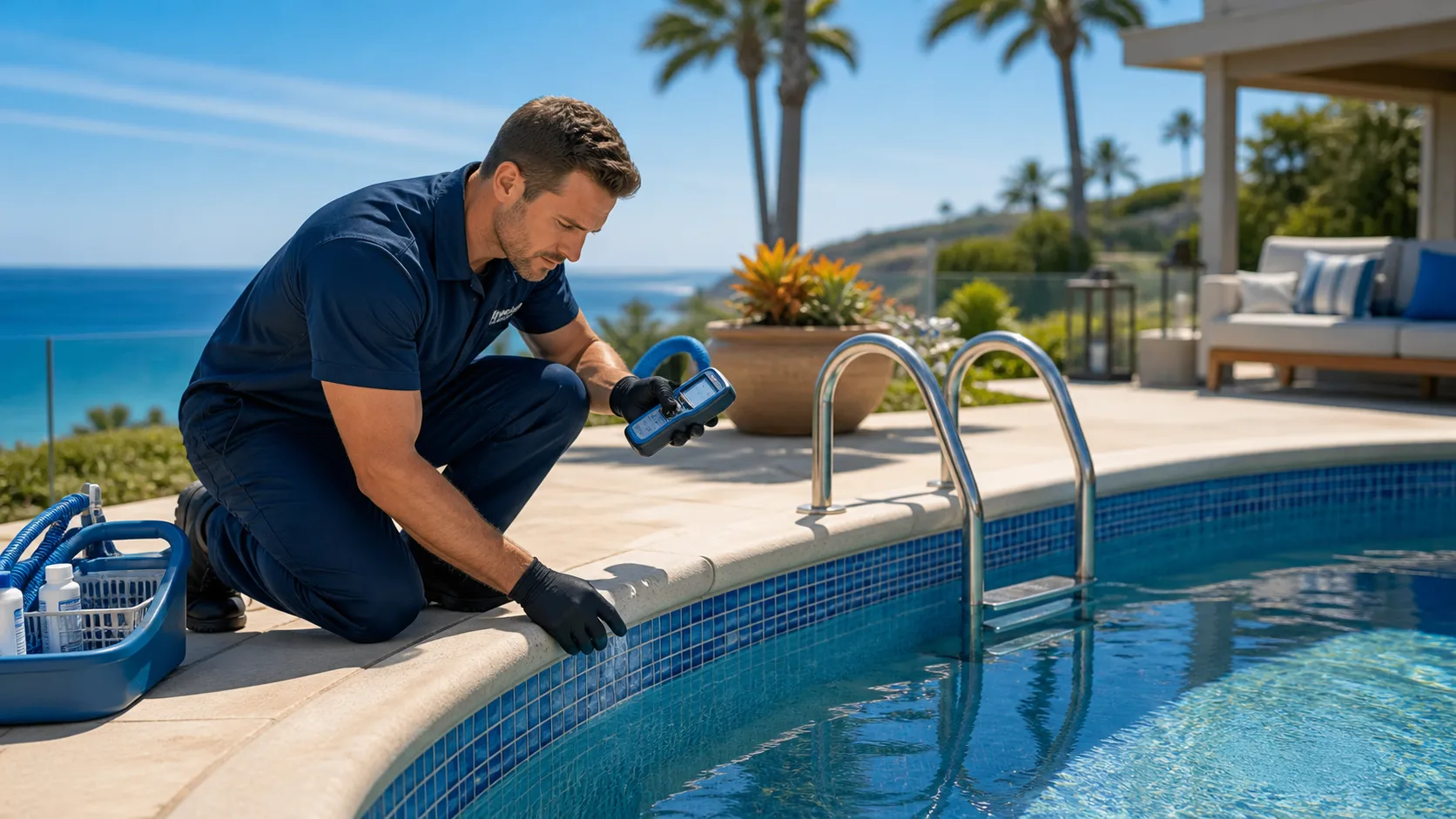
Key Takeaways for Coastal Pool Owners
Living near the coast is great for you, but tough on your pool. Salt air, fog, and the marine layer in North County San Diego speed up corrosion and scale on your equipment, tile, and metal parts if you do not stay ahead of it. The good news is that with the right plan, you can keep your pool looking clean and running smoothly all year.
Here are the main things to remember:
- Coastal air, salty moisture, and strong sun wear out heaters, pumps, rails, and tile faster than inland areas.
- Tight water chemistry, regular rinsing and inspections, and choosing the right materials cut down damage.
- A custom pool maintenance plan in San Diego that matches our local marine layer seasons keeps your pool clear, safe, and ready to enjoy any month of the year.
Why Coastal San Diego Pools Need Extra Attention
Pools in Encinitas and the rest of North County live in a different world than pools a few miles inland. The marine layer rolls in, sits low over the neighborhood, and coats everything with moist, salty air. That thin film of moisture is enough to start attacking metal and feeding scale on your waterline tile.
Early fall is a tricky time. Even as days stay warm, nights can be cooler and more damp. We still see June Gloom-style mornings, just later in the year, with:
- Longer periods of fog and mist sitting on rails, tile, and deck
- More condensation on equipment and covers overnight
- Slower drying times for anything metal or porous stone
This is not only about looks. When that salt and moisture mix with imbalanced pool water, it can lead to:
- Heater failures from internal corrosion
- Salt cell problems and shorter equipment life
- Cracked or stained tile and grout at the waterline
Taking coastal pool care seriously protects your comfort, keeps the pool inviting, and helps avoid surprise breakdowns when you want to swim.
Understanding Corrosion and Scale Around Your Pool
To care for a coastal pool, it helps to know what you are fighting.
Corrosion is the breakdown of metal when it sits in water, salt, and chemicals. Salt air speeds this up, especially when the marine layer hangs around. You might see:
- Orange or brown rust spots on rails, screws, or light rings
- Pitting or rough patches on metal surfaces
- Flaking or bubbling on painted or coated parts
Scale is the hard, white or gray mineral buildup from hard water and high pH. It often shows up as:
- Chalky rings on tile at the waterline
- Rough spots you can feel on plaster or pebble surfaces
- Cloudy deposits inside heaters and salt cells
The marine layer makes both problems worse. Salt droplets in the air land on your pool and deck, mix with already hard water, and then dry on surfaces. If water chemistry is off, you get corrosion and scale at the same time.
The most at-risk spots around a coastal pool include:
- Heater internals and heat exchangers
- Salt cell plates in saltwater systems
- Handrails, ladders, and anchor points
- Light rings and faceplates
- Tile line and grout joints
- Automatic cover tracks and hardware
Imbalanced water speeds everything up. High calcium hardness with high pH can leave heavy scale. Low alkalinity with salty moisture can make metals rust faster. Keeping these factors steady is a key part of pool maintenance in San Diego, especially by the coast.
Smart Water Chemistry for Coastal Pool Protection
For coastal pools, water balance is your best shield. The goal is to keep your water gentle on both metal and surfaces, without drifting into corrosion or heavy scale.
The main things to watch are:
- pH
- Total alkalinity
- Calcium hardness
- Salinity for salt systems
- LSI or similar balance factor
During the foggier fall and winter marine layer months, it helps to:
- Test more often, especially after long foggy spells or storms
- Keep pH in a tighter range so it does not swing up and down
- Avoid pushing calcium hardness too high if your surface type allows
- Check that salinity for salt systems stays within the recommended range
Because every pool is different, professional service from a team that understands coastal conditions can make a big difference. We look at your surface type, the age and style of your equipment, and how close you are to the ocean, then adjust your routine so your water protects your investment instead of wearing it down.
Protecting Equipment, Tile, and Hardware From Salt Air
Water chemistry is only part of the picture. Physical protection matters too, especially outdoors in salty air.
For equipment and equipment pads, it helps to:
- Use coastal-rated hardware and components where possible
- Keep the pad area clear and well vented so moisture can dry out
- Rinse exposed metal after heavy fog or strong onshore winds
- Add sacrificial anodes in the system when appropriate
Tile and grout at the waterline take a beating from sun, salt, and splashing. To guard that area, we often suggest:
- Regular brushing of the tile line to break up early scale
- Planned descaling before deposits get thick and stubborn
- Penetrating sealers on grout and porous stone coping
- Professional cleanings on a set schedule, not just when things look bad
Rails, ladders, and other fixtures need extra care near the coast. Good habits include:
- Choosing 316 stainless or coated metals when you install or upgrade
- Using protective waxes or sealants on exposed metal
- Inspecting screws, anchors, and plates each season for tiny rust spots
Catching a little stain or rust ring early is much easier than dealing with a loose rail or failing anchor later.
Seasonal Pool Care Strategy for Marine Layer Months
Because our climate stays warm, many North County pools are used almost all year. Instead of winterizing, we shift the focus as fall and the marine layer season arrive.
A simple seasonal plan might look like this:
Late summer prep
- Deep tile cleaning and scale removal
- Sealing of grout and porous stone
- Full equipment check and cleaning
Early fall adjustments
- Tighter control of pH and alkalinity
- Review of calcium hardness and salinity levels
- A fresh look at rails, ladders, and light rings
Marine layer and winter vigilance
- Extra inspections after long foggy stretches
- More frequent water testing
- Touch up sealing and hardware cleaning as needed
Consistent weekly service is what keeps this all manageable. Small rust spots, cloudy rings at the tile-line, or a new pump sound are easy to fix when caught early. When ignored, those same signs can turn into bigger repairs.
Because DelRancho Pools has been caring for pools in Encinitas and North County for generations, we are very familiar with the way local winds, marine layers, and even neighborhood water supplies affect each pool. That local knowledge helps us build care plans that match your exact backyard, not just a generic schedule.
Frequently Asked Questions About Coastal Pool Care
Question 1: How often should I test my pool water near the coast?
In coastal parts of San Diego, testing at least once a week is very important, and twice a week is even better during heavy marine layer periods or right after storms. Frequent testing keeps pH, alkalinity, and calcium hardness in a narrow range so corrosion and scale never really get started.
Question 2: Does a saltwater pool corrode equipment faster by the ocean?
A salt system alone does not have to mean more corrosion. Problems start when high salt, salty air, and poor water balance all stack up. Keeping salinity in range, holding pH and alkalinity steady, and cleaning the salt cell and nearby metal parts on a routine schedule helps keep corrosion under control.
Question 3: How can I get rid of existing scale on my pool tile?
Light scale sometimes comes off with a nylon brush and special scale cleaners, but heavier deposits usually need professional care such as media blasting or controlled chemical treatment. DelRancho Pools can look at the kind and thickness of your scale and choose a method that cleans the tile without damaging the surface underneath.
Question 4: Is it worth sealing my stone or grout around the pool?
Yes, sealing is a smart move next to the coast. A quality, UV-resistant penetrating sealer helps keep salty moisture out of porous stone and grout, reduces stains, and slows down scale buildup and surface wear. Keeping up with sealing on a regular schedule can help your coping, decking, and joints look good longer.
Question 5: What are the benefits of hiring a professional for pool maintenance in San Diego?
A professional service brings steady testing, careful chemical balancing, and trained eyes that notice early signs of coastal corrosion and scale. A company like DelRancho Pools, with long experience in local conditions, can tailor your maintenance routine, suggest coastal-friendly materials and upgrades, and help prevent expensive repairs by staying ahead of salt air and marine layer damage.
Get Started With Your Project Today
If you are ready to enjoy a cleaner, more reliable pool or spa, our team at DelRancho Pools is here to help. Let us handle the details of pool maintenance in San Diego so you can spend more time relaxing and less time troubleshooting. Reach out today to schedule service or discuss a custom maintenance plan that fits your needs.