
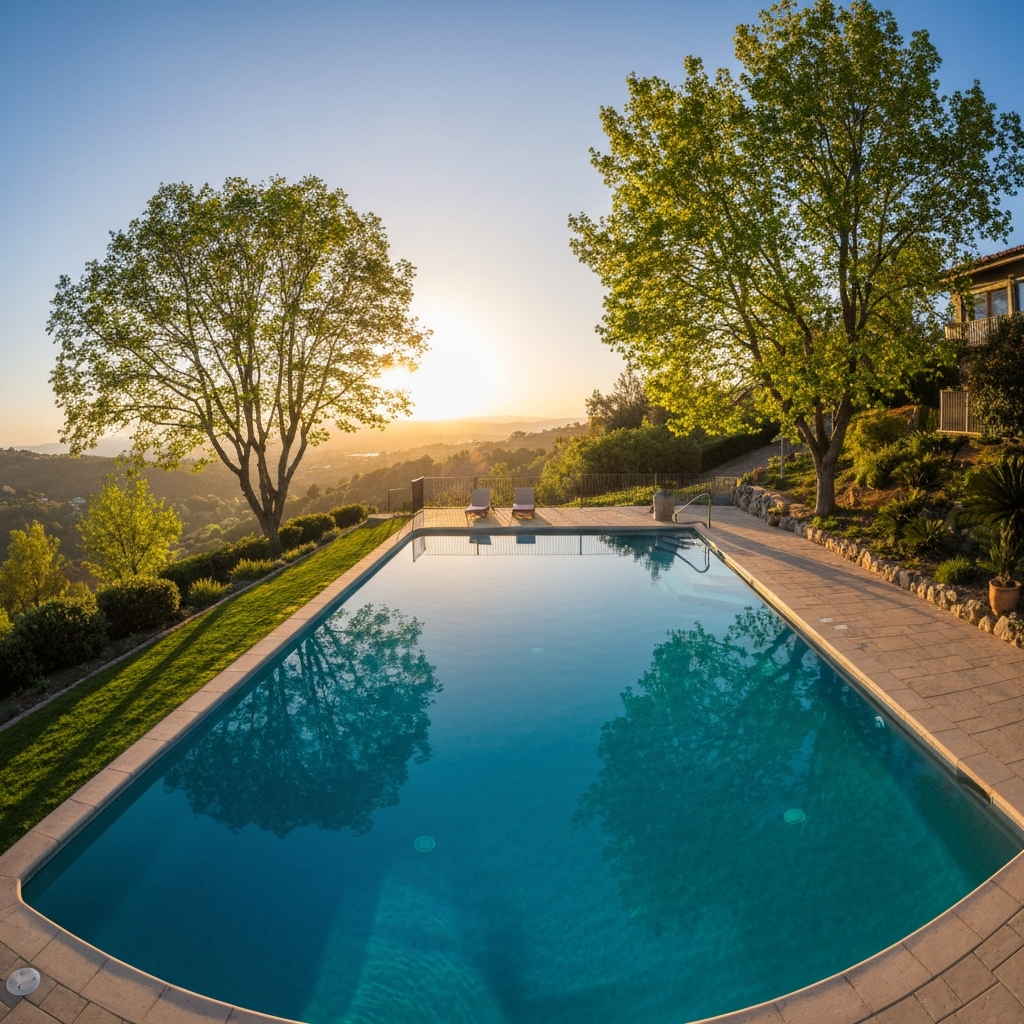
Key Highlights
- Building a swimming pool in a sloped yard is entirely possible with careful planning and professional help.
- A retaining wall is often necessary to provide structural support and manage different ground levels.
- Proper drainage systems are crucial to control water runoff and prevent soil erosion around the pool.
- A sloped yard offers unique opportunities for stunning designs like infinity edge or terraced pools.
- Partnering with an experienced pool builder is essential to handle the engineering challenges of a hillside project.
- Landscaping and hardscaping can turn a sloped pool area into a beautiful and functional outdoor space.
Introduction
Have you been dreaming of a swimming pool but think your sloped backyard makes it impossible? Don’t let a hill get in the way of your vision. Building a pool on an incline is more common than you might think, and it can result in a truly spectacular outdoor feature. With some careful planning and the right expertise, your sloped property can be transformed. A professional can use your yard’s natural landscape to create a custom design that is both beautiful and secure.
Understanding the Challenges of Building a Pool on a Slope
Building a pool on uneven terrain does present a unique set of challenges. The primary concerns involve ensuring the pool structure is stable, managing water drainage, and handling construction logistics on a slant. These factors require specialized construction techniques that differ from building on a flat lot.
Your pool builder must address how to support the pool on an uphill yard and prevent soil movement. A professional assessment is vital to identify potential issues with soil, water flow, and access before construction begins, ensuring a safe and lasting installation.
Assessing Site Conditions and Soil Stability
The first step in any hillside pool project is a thorough site assessment. The stability of the slope is critical, and understanding the existing topography is essential for the pool’s long-term structural integrity. An expert will analyze your sloped property to determine the soil composition and its ability to support a heavy pool structure.
Different soil types react differently under pressure. For instance, loose or sandy soil might require extra reinforcement to prevent shifting, while dense clay may hold its shape better. A pool builder uses this information to plan the foundation and any necessary support systems to ensure the ground is stable.
This evaluation helps create a secure base on uneven ground, which is fundamental to the entire construction process. Starting with a solid understanding of your site conditions prevents future problems and ensures your pool remains safe for years to come.
Drainage, Water Flow, and Erosion Control
On a sloped property, managing water is a top priority. Hills naturally affect water flow, and without proper planning, water runoff can cause soil erosion, pool damage, or flooding in lower areas of your yard. It’s crucial to have a strategy for where water collects and how it’s directed away from the pool.
An experienced builder will design effective drainage systems to handle rainfall and prevent it from compromising the pool’s structure. On downward slopes, these systems are especially important for protecting both your pool and your landscape from the effects of erosion.
Key erosion control measures include:
- Installing French drains to redirect groundwater.
- Using groundcover plants with deep roots to hold soil in place.
- Building retaining walls to manage slopes and block runoff.
- Grading the land to guide water away from the pool area.
Access and Construction Logistics for Sloped Properties
One of the practical hurdles of building a hillside pool is simply getting everything to the construction site. Slopes can make access for heavy machinery, equipment, and building materials more complicated than on a flat lot. This requires extra planning and sometimes specialized tools to move everything safely and efficiently.
Creative construction techniques are often needed to overcome these logistical challenges. Your pool contractors might need to build a temporary path or use smaller equipment to navigate the terrain. These considerations are factored into the project timeline and budget from the very beginning.
Working with a team that has experience in such environments is key. They will have proven strategies for managing construction logistics on slopes, ensuring the project proceeds smoothly without causing unnecessary disruption to your property.
Important Engineering Considerations for Pool Construction
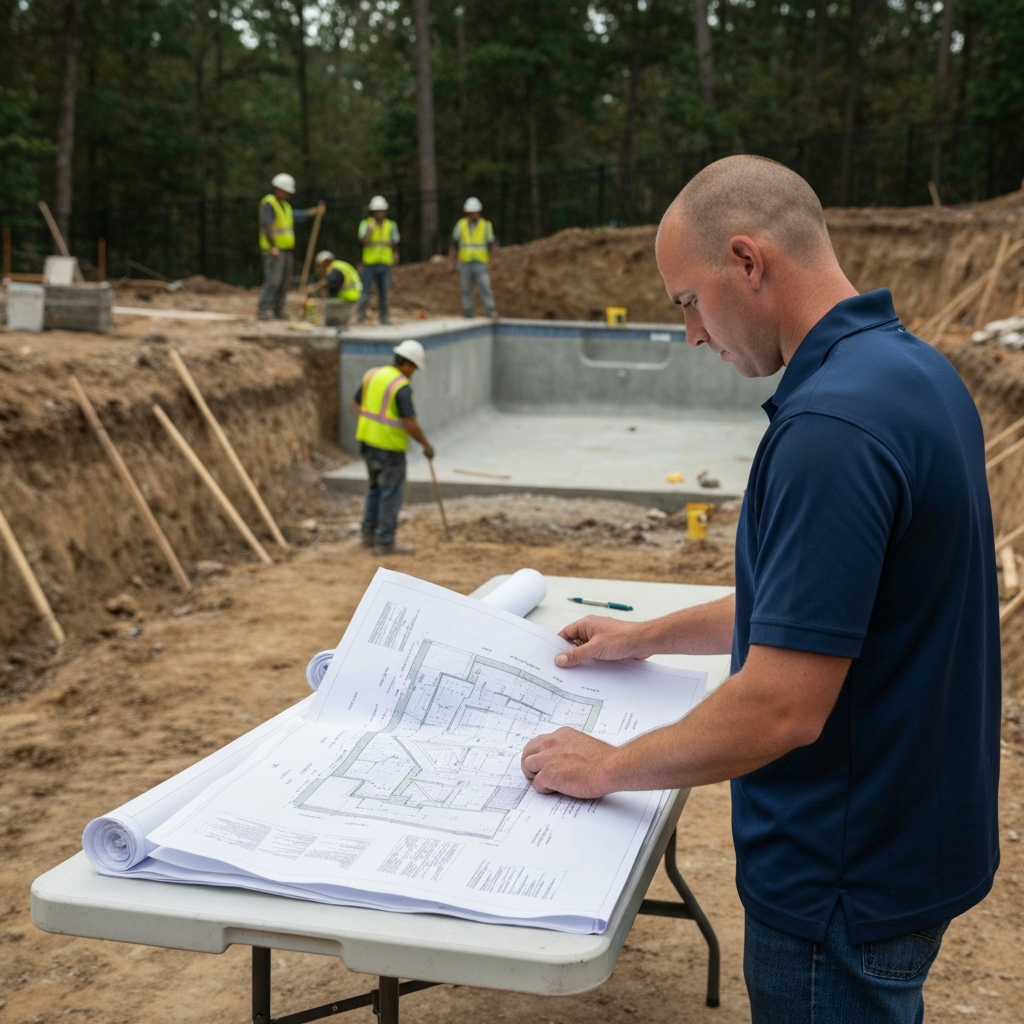
When you build a pool on a slope, engineering is everything. Specialized engineering solutions are required to guarantee the pool’s structural integrity and longevity. This goes beyond simply digging a hole; it involves creating a structure that can withstand the pressures of the surrounding earth and water.
Key considerations include building a retaining wall for support, designing effective systems to manage water runoff, and ensuring the foundation is perfectly stable. These elements of hillside pool construction work together to create a safe and beautiful pool that lasts. We will explore some of these important structural features next.
Retaining Walls and Structural Reinforcement
A retaining wall is one of the most important features for a pool on a slope. Its main job is to hold back soil and create a level area for the pool, ensuring its structural integrity. By separating higher points of your yard from lower ones, it provides crucial support and prevents soil from sliding toward the pool.
However, retaining walls are not just functional; they can also be a stunning design element. A high wall can be faced with beautiful tile or stone, while others can incorporate water features, built-in seating, or planters. You can also use large boulders to create a more natural-looking support system. This structural reinforcement turns a challenge into an opportunity for a custom look.
Here are some common materials used for retaining walls:
| Material | Key Benefits |
|---|---|
| Poured Concrete | Extremely strong and durable, can be faced with other materials. |
| Concrete Blocks | Versatile and cost-effective, available in many styles. |
| Natural Stone | Offers a beautiful, organic look that blends with the landscape. |
| Wood Timbers | Provides a rustic aesthetic, best for lower walls. |
Managing Pool Slope and Depth Adjustments
Creating a perfectly flat surface for a pool on a sloped yard is a non-negotiable step. Builders achieve this by grading the land—cutting into the high side and building up the low side. This process ensures the pool shell rests on a stable, level base, which is critical for the water to sit evenly.
The internal pool slope and depth must also be carefully planned. Industry standards regulate the transition from shallow to deep ends to ensure safety. For example, the initial slope might be gradual, no steeper than one foot of drop for every seven feet of length. After this point, a “drop-off” can allow for a steeper transition into the deep end.
Your builder can use the yard’s natural slope to create interesting different levels around the pool. For instance, the deck on the high side can be at one level, while a lower patio can be built on the other, creating distinct zones for relaxing and entertaining.
Choosing Proper Pool Foundations for Hillside Yards
The foundation is the unseen hero of your hillside pool. On a sloped property, the pool foundation must be engineered to provide exceptional structural stability. This starts with a deep understanding of the soil composition and the specific pressures the slope will exert on the pool shell.
Your pool builder will determine the best type of foundation for your yard. This could involve reinforced concrete piers drilled deep into the ground, a thick gravel base for drainage and stability, or other specialized techniques. The goal is to anchor the pool securely to the hillside, preventing any shifting or settling over time.
Because every sloped yard is different, there is no one-size-fits-all solution. A professional assessment is the only way to ensure the correct foundation is chosen for your project. This critical step protects your investment and ensures your pool is safe and secure for decades of enjoyment.
Design Options for Sloped Backyard Pools
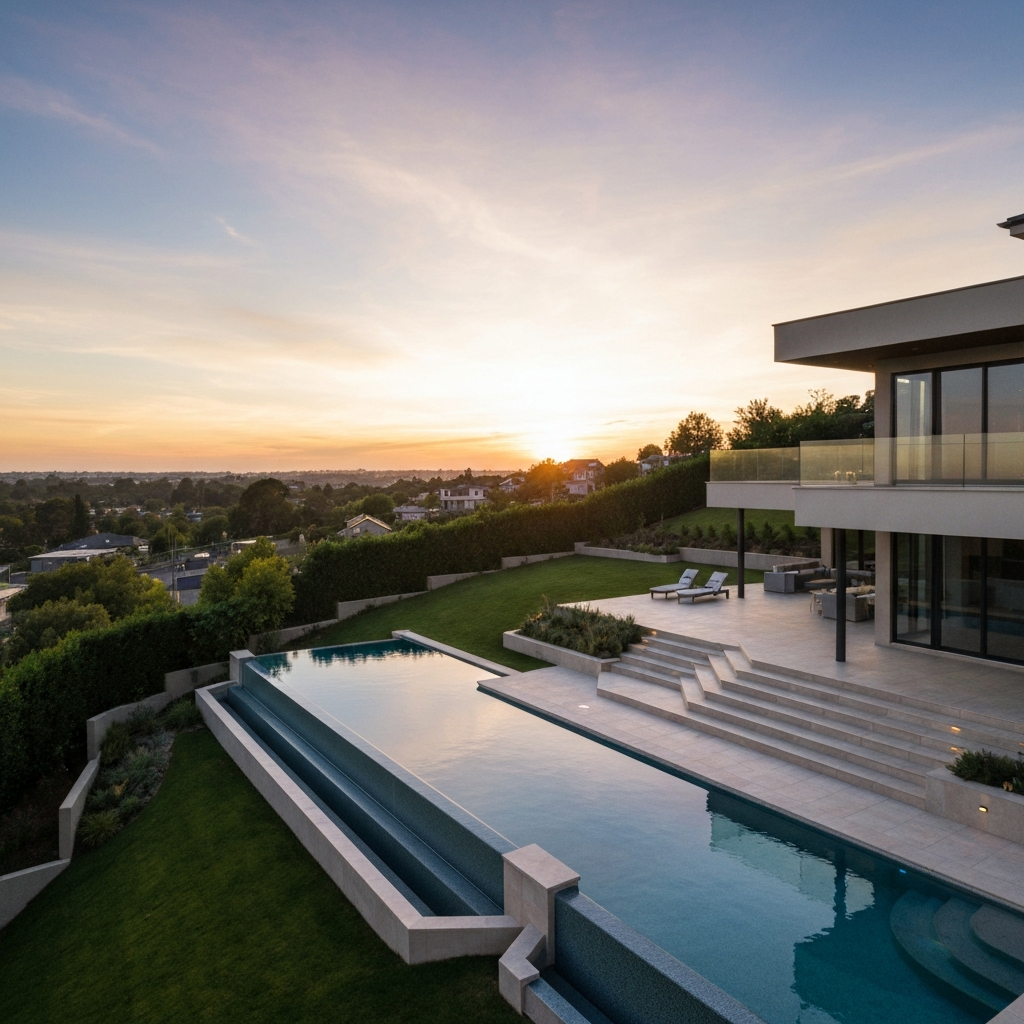
A sloped yard shouldn’t limit your design options—it should expand them. A slope offers a unique canvas for creating a pool with incredible visual interest. Instead of a simple rectangle on a flat lawn, you can have a multi-dimensional oasis that interacts with the landscape.
A talented pool designer can present a range of design solutions that turn the slope into an asset. From creating breathtaking views to incorporating dramatic water features, the right design transforms your pool structure into a one-of-a-kind backyard centerpiece. Let’s look at some popular design ideas for sloped yards.
Infinity Edge and Vanishing Edge Pools
Infinity edge pools are perhaps the most iconic design for a sloped yard. They create a stunning illusion of water stretching endlessly to the horizon. The pool water flows over one edge into a hidden basin below, where it is collected and recirculated back into the pool. This design is perfect for properties with a beautiful view.
This vanishing edge not only provides a high-end aesthetic appeal but also serves a practical purpose on a slope. It works with the gradient of the land rather than fighting against it. The “missing” wall on the downward-sloping side of the pool’s design becomes a dramatic and beautiful focal point.
Many homeowners enhance the effect by building a lowered patio, making the water’s edge appear to merge with the sky. The result is a luxurious, resort-style feel that turns your backyard into a breathtaking escape and a prime example of luxury pool design.
Multi-Level Terraced Pool Designs
For yards with steeper slopes, a terraced pool design is an elegant and practical solution. This approach involves creating multiple levels or “steps” down the hill, with the pool and patio areas built into these different levels. It gives the landscape a grand, staircase-like appearance that is both visually striking and highly functional.
This multi-level approach allows you to create distinct zones within your overall space. You could have the pool on one terrace, a lounge area on another, and a dining patio on a third. These design elements break up the slope in a manageable way, making the entire area more usable.
Terracing also provides the perfect opportunity to add other features. You can easily incorporate a spa that spills into the main pool, a fun pool slide built into the hillside, or cascading waterfalls that flow between the different levels, adding movement and sound to your backyard oasis.
Integrating Waterfalls, Grottos, and Creative Features
A slope is the perfect natural setting for incorporating stunning water features into your pool design. The change in elevation provides a natural starting point for waterfalls that can cascade over rocks or a sleek modern wall, adding both visual appeal and the soothing sound of moving water.
You can get creative with features that might not be possible on a flat lot. Imagine a hidden grotto tucked behind a waterfall or a swim-up bar on a lower terrace. Tall stone or glass walls can create a sophisticated, modern look, especially in small spaces where you want to emphasize vertical lines.
Consider these creative backyard pool ideas:
- A massive rock waterfall that makes the pool feel like a natural lagoon.
- A sleek, sheet-like cascade from an elevated wall for a contemporary vibe.
- A hidden staircase leading down to a secluded pool area.
- Integrating an infinity waterfall on one side of the pool.
Landscaping Ideas for Pools on Slopes
Landscaping around a pool on a slope is about more than just looks; it’s also about function. The right combination of plants and hardscaping can help with erosion control while beautifully integrating the pool into the surrounding landscape.
Using materials like natural stone for pathways and planting lush landscaping on the sloped parts of the yard can create a seamless transition from your home to the pool. This thoughtful approach enhances the beauty of the pool area and ensures the long-term stability of the hillside.
Selecting Plants for Erosion Control and Privacy
Choosing the right plants is a key part of landscaping a hillside pool area. Plants with deep, fibrous root systems are excellent for erosion control, as they help hold the soil in place on steep grades. This lush landscaping is a natural and beautiful way to stabilize the ground around your pool.
Plants can also be strategically placed to create privacy. Taller shrubs or ornamental grasses can screen the pool from neighbors’ views, creating a more intimate and secluded atmosphere. This allows you to enjoy your backyard retreat without feeling exposed.
When selecting plants for the surrounding landscape, consider these options:
- Groundcover plants: These spread quickly to cover bare soil and prevent erosion.
- Ornamental grasses: Their deep roots are great for stability, and they add texture.
- Evergreen shrubs: They provide year-round privacy and greenery.
- Tropical trees: These can absorb large amounts of water and add a resort-like feel.
Hardscaping Solutions: Decks, Patios, and Pathways
Hardscaping refers to the non-living elements of your landscape, and it plays a huge role in the functionality of a sloped pool area. Multi-level decks, patios, and pathways can transform an unusable slope into a beautiful and practical outdoor living space.
Wooden or composite decks can be built out from the house to create a level area for lounging and dining, while stone patios can be set into the hillside at different levels. This allows you to create different “rooms” in your backyard, each with its own purpose and feel. Using a mix of materials, like natural stone near the pool and wood for a raised deck, adds texture and visual interest.
Well-placed pathways are also essential, providing safe and easy access to all parts of the pool area. Whether you choose stepping stones or a paved walkway, these hardscaping elements connect the different zones of your yard and complete the cohesive design.
Key Steps in Planning and Building Your Pool
Turning your dream of a hillside pool into reality involves a series of important steps. The success of your pool installation hinges on proper planning, from the initial design to the final touches. This process ensures that all the unique challenges of your property are addressed from the start.
Working with pool builders who have years of experience with sloped yards is the most critical step of all. Their expertise will guide you through the process, resulting in a stunning pool that promises years of family fun and relaxation. Let’s look at the key steps in the journey.
Working with Experienced Pool Builders and Engineers
Building a pool on a slope is not a job for just any contractor. It requires a team with specific expertise in hillside construction. A skilled pool builder and a structural engineer are essential partners in this process. They have the knowledge to apply the right construction techniques and ensure your pool is both beautiful and structurally sound.
An experienced custom pool builder in San Diego will know how to navigate local zoning laws and soil conditions. They can foresee potential issues and develop solutions before they become costly problems. This expertise is invaluable when dealing with the complexities of a sloped site.
When choosing your team for pool construction in San Diego, look for:
- A strong portfolio of completed hillside pool projects.
- Positive reviews from previous clients with similar properties.
- A clear understanding of engineering and drainage requirements.
- Years of experience working with challenging terrain.
Budgeting and Securing Permits for Sloped Yard Projects
It’s important to have a realistic budget when planning a pool on a sloped yard. Generally, these projects are more expensive than pools on flat ground. The additional project costs come from the need for extensive site work, retaining walls, specialized drainage, and more complex engineering.
Your builder can provide a detailed estimate that breaks down these expenses. While the initial investment may be higher, a well-designed hillside pool can significantly increase your property value, making it a worthwhile long-term investment. This is also a great time to consider a pool remodeling San Diego project if you are upgrading an existing space.
Securing the right permits is another crucial step. Many cities have strict regulations for construction on slopes. You will likely need to submit detailed blueprints and engineering plans for approval. An experienced builder will handle this process for you, ensuring your project complies with all local codes.
Conclusion
Building a pool on a sloped yard can be a rewarding endeavor, provided you take the necessary steps to address the unique challenges involved. From understanding site conditions to selecting the right design options, every detail matters in ensuring not only the functionality but also the aesthetic appeal of your pool. By working closely with experienced professionals and considering both engineering and landscaping aspects, you can create a stunning pool that complements your sloped yard while enhancing your outdoor space. Remember, careful planning is the key to success in this journey. If you’re ready to start planning your dream pool, get in touch with our team today!
Frequently Asked Questions
Can you build an inground pool on any type of slope or hillside?
Yes, you can build an inground pool on most slopes. However, the feasibility depends on the steepness of the hillside, soil stability, and accessibility. A professional evaluation is necessary to determine if construction is possible and what engineering solutions, such as retaining walls and proper drainage, will be required.
How does building on a slope affect total project costs?
Building on a sloped yard typically increases project costs. This is due to the need for extensive earthwork, retaining walls for support, advanced drainage solutions, and more complex engineering. The extra materials and labor required to make the site safe and stable contribute to the higher price tag.
What are the main maintenance considerations for hillside pools?
Maintenance for a hillside pool includes regularly inspecting retaining walls and drainage systems to ensure they are functioning correctly. It is also important to monitor the pool area for any signs of soil shifting or erosion and to keep drains clear to manage water runoff and protect the pool’s structural integrity.