
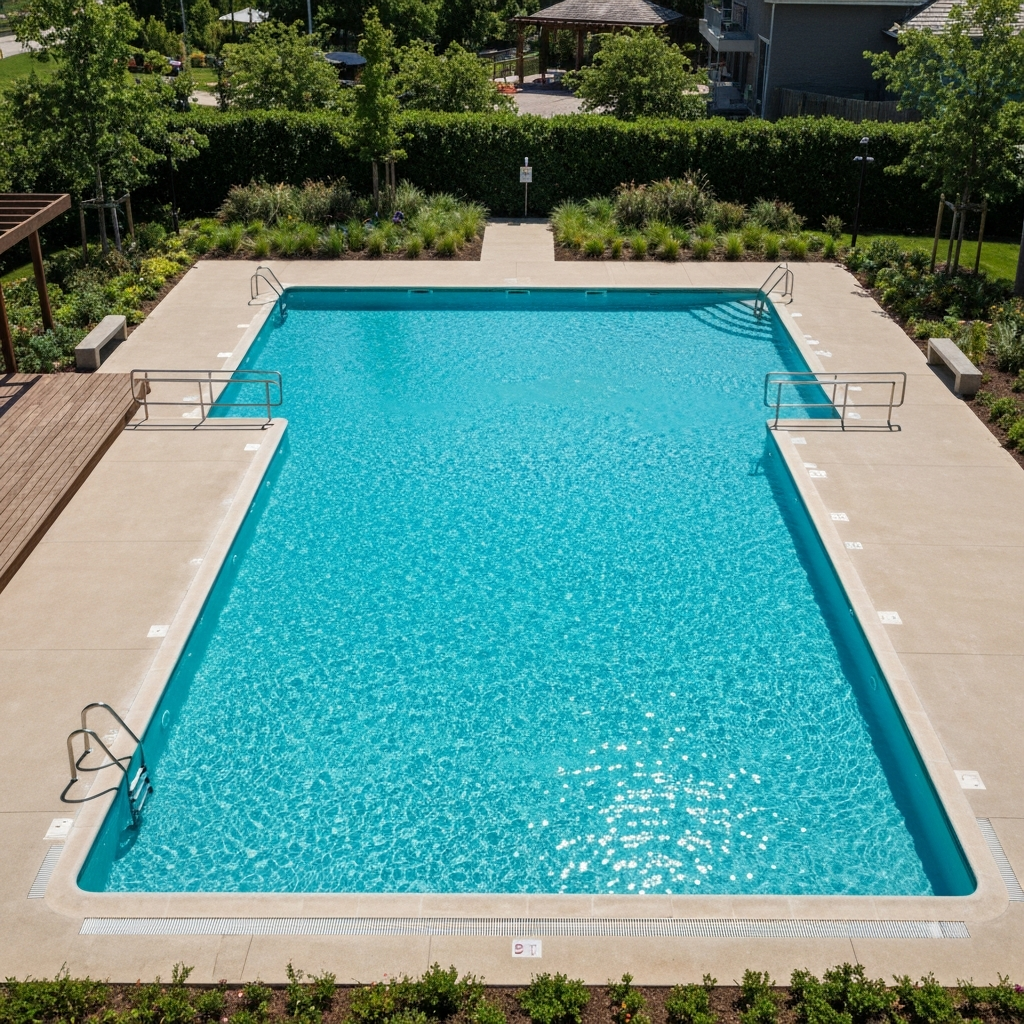
Key Highlights
Here’s a quick look at what we’ll cover in this guide to accessible pool design:
- An accessible pool design ensures everyone can enjoy the water, regardless of mobility challenges.
- Features like ramps and zero-entry designs provide safe and easy access for all swimmers.
- Understanding the Americans with Disabilities Act (ADA) is key to a compliant and inclusive swimming pool.
- Pool lifts and transfer walls offer alternative entry points for people with unique needs.
- Inclusivity in pool design creates a welcoming environment for family members and guests of all ages.
- A thoughtful design combines functionality with aesthetic appeal for a beautiful backyard oasis.
Introduction
Are you thinking about a new swimming pool or a remodel? Creating a space that everyone can enjoy is a wonderful goal. An accessible pool design is about more than just following rules; it’s about inclusivity and making sure every family member and friend feels welcome. By incorporating features that meet the standards of the Americans with Disabilities Act, you can create a beautiful and functional backyard pool that serves people of all physical abilities. Let’s explore how you can make your pool an oasis for everyone.
Principles of Accessible Swimming Pool Design
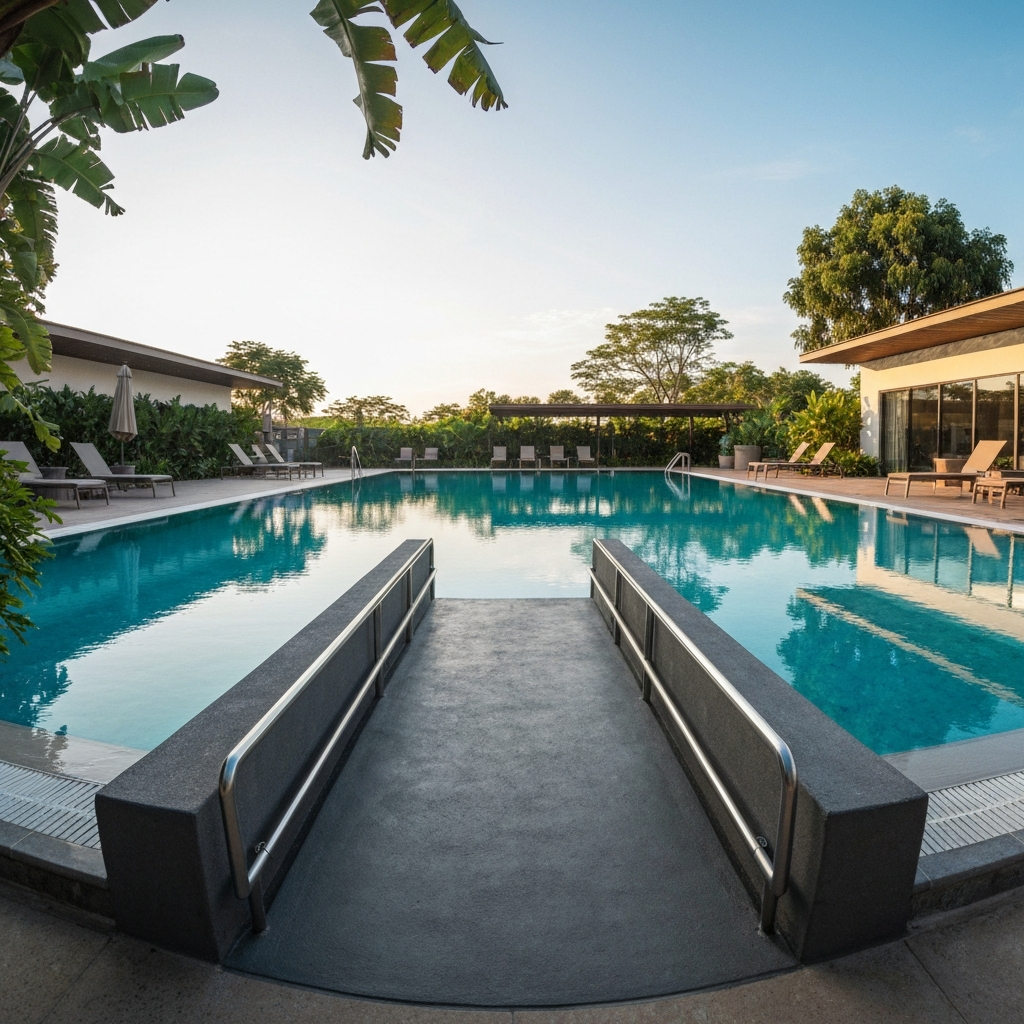
The foundation of accessible swimming pool design is creating a barrier-free environment. This means considering how people with mobility challenges or other physical limitations will navigate and use the pool area safely and comfortably. Accessible pools are designed to be welcoming for everyone, from young children to older adults.
Your goal should be to make sure the entire pool area promotes inclusion. This involves thinking about everything from the deck surface to the way people enter the water. Let’s look at the specific legal requirements and the essential features that make a pool truly inclusive.
Understanding ADA Requirements for Pools
The Americans with Disabilities Act (ADA) sets specific legal requirements for public and commercial swimming pools to ensure they are accessible. These guidelines, outlined by the Department of Justice, are designed to remove barriers and provide equal access for individuals with disabilities. For homeowners creating a backyard pool, these standards serve as an excellent guide for inclusive design.
Complying with the Disabilities Act isn’t just about avoiding legal issues; it’s about a commitment to social responsibility. Key ADA requirements focus on accessible means of entry and exit. For example, large pools often need at least two accessible entry points.
These can include pool lifts, sloped entries, or transfer systems. Following these rules helps ensure your swimming pool is a safe and enjoyable space for people with a wide range of physical abilities, making your backyard a more welcoming place for all your guests.
Essential Features for Inclusive Pool Access
When planning your pool design, several accessible pool features can make a huge difference for those with mobility challenges. These elements are designed to blend seamlessly into your luxury pool design while offering critical support and safety. A gradual slope into the water is one of the most popular and effective features.
Handrails are another essential component. They should be installed along ramps, steps, and transfer walls to provide stability for users as they enter and exit the swimming pool. Good lighting is also crucial, as it helps people with visual impairments navigate the pool area safely.
Here are some essential features for inclusive access:
- Pool Ramps: A sloped entry that allows users to walk or roll into the water.
- Zero-Entry: A beach-style entry with a very gradual slope, starting from the deck level.
- Pool Lifts: Mechanical lifts that safely transfer a person from the deck into the water.
- Transfer Walls: Sturdy walls that help individuals move from a wheelchair to the pool.
Designing Effective Pool Ramps
Pool ramps are a fantastic way to improve mobility and access to your swimming pool. These structures feature a gradual slope, allowing individuals who use wheelchairs or have difficulty with stairs to enter the water with ease. When integrated into your pool design, ramps can be both functional and stylish.
Properly designed ramps are essential for safety and usability. Key considerations include the ramp’s slope, its width, and the material used for its surface. Let’s review these details to ensure your ramp is effective for everyone.
Ramp Slope, Width, and Surface Material Choices
When designing an accessible pool, the specifics of your ramp are critical. The slope must not be too steep; a ratio of 1:12 is the standard, meaning for every 12 inches of horizontal distance, the ramp can rise no more than one inch. This ensures a gentle and safe entry. The width should be at least 36 inches to comfortably accommodate a wheelchair.
The surface material is equally important for preventing slips. Textured concrete, non-slip tiles, or even certain types of natural stone can provide the necessary grip. A stylish and accessible pool design is entirely achievable when you select materials that are both beautiful and safe. As a custom pool builder in San Diego, we can help you choose the right options.
Here are the key considerations for your pool ramp:
| Feature | Guideline | Why It’s Important |
|---|---|---|
| Slope | No steeper than a 1:12 ratio | Ensures a gentle, manageable incline for all users. |
| Width | At least 36 inches wide | Provides ample space for wheelchair access and movement. |
| Surface | Non-slip material | Prevents accidents and ensures secure footing in wet conditions. |
Integrating Handrails and Rest Platforms
To make pool ramps even safer and more user-friendly, you must integrate handrails. Handrails should be installed on both sides of the ramp to provide support for users as they move up and down the slope. These safety features are crucial for people who need extra stability.
In addition to handrails, grab bars can be placed at the top and bottom of the ramp to assist with transfers. For longer ramps, incorporating rest platforms is a great idea. These flat areas allow users to pause and rest, making the journey into and out of the pool less strenuous. These additions are vital for a truly accessible pool area.
Consider these key integrations for ramps:
- Continuous Handrails: Must be on both sides of the ramp for constant support.
- Proper Height: Handrails should be at a height that is comfortable for both seated and standing users.
- Rest Platforms: For long ramps, flat landing areas provide a space to rest.
- Sturdy Grab Bars: Positioned at entry and exit points for extra assistance.
Zero-Entry Pools and Their Accessibility Advantages
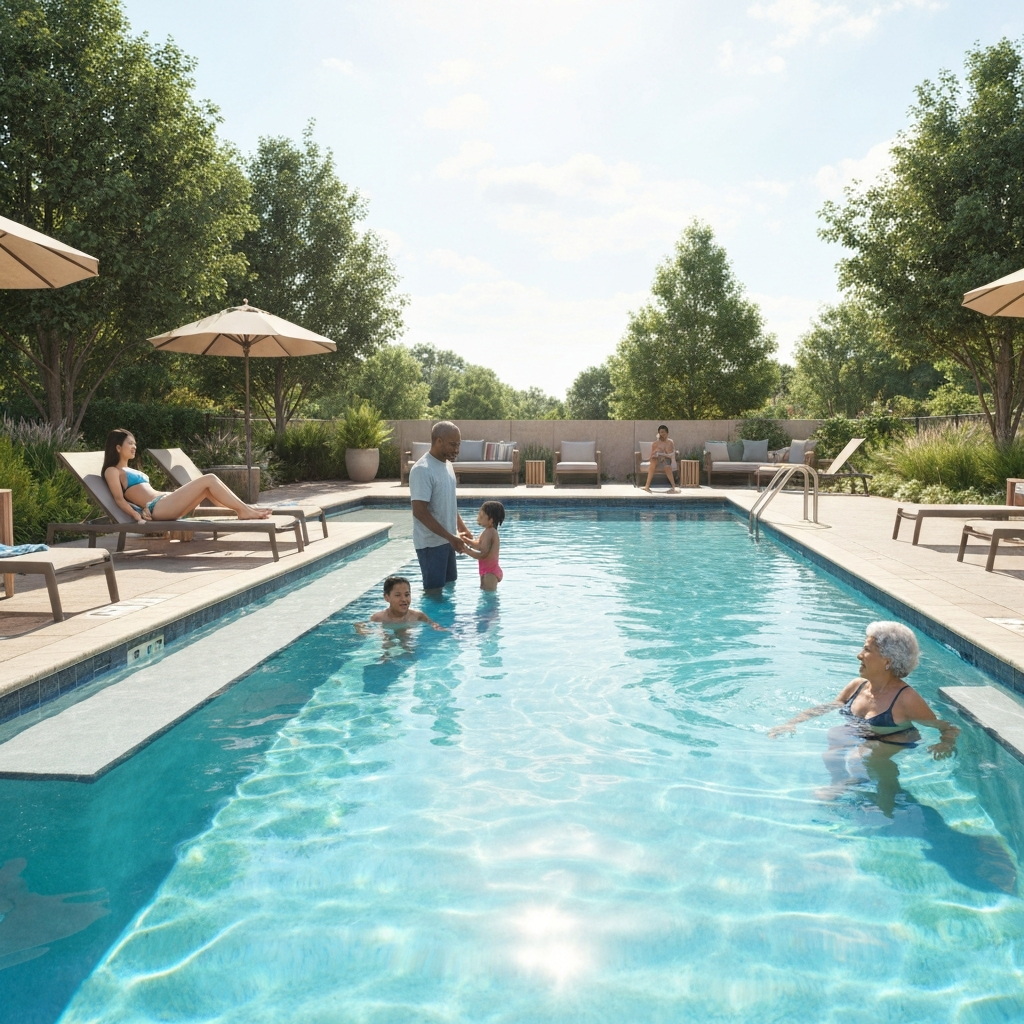
Zero-entry pools, also known as beach entry pools, are one of the most elegant and effective solutions for accessible pools. Instead of steps or ladders, the pool has a gradual slope that starts at deck level and slowly deepens, just like a natural beach. This design offers seamless entry for everyone.
This type of entry is not only highly functional but also adds significant aesthetic appeal to your backyard. The smooth transition from the deck to the water creates a resort-like feel. Let’s look closer at what a zero-entry pool is and the benefits it offers.
What is a Zero-Entry Pool?
A zero-entry or beach entry pool is a type of pool design where one or more sides have a gradual slope entering the water. The entry point is level with the pool deck and slowly descends into the shallow end. This design completely eliminates the need for stairs or ladders, providing a seamless transition from land to water.
The gentle, gradual slope makes these pools incredibly accessible. People using wheelchairs, walkers, or those who are unsteady on their feet can easily and safely enter the water. It’s an ideal solution that feels natural and intuitive, removing physical barriers that traditional pools often present.
This innovative pool design is a popular choice in luxury pool design because it combines accessibility with a beautiful, modern look. If you’re exploring backyard pool ideas, a zero-entry design is a versatile addition that serves every guest.
Popular Zero-Entry Designs and User Benefits
The aesthetic appeal of zero-entry pools is a major draw for many homeowners. These designs can be customized with various materials and shapes to create a stunning backyard oasis. You can add water features like fountains or bubblers in the shallow area for extra fun.
The benefits extend to every family member. Young children and toddlers can splash safely in the shallowest part of the water without the risk of an abrupt drop-off. It’s also a perfect spot for adults who just want to dip their feet in for relaxation without fully submerging. This versatility makes it a favorite for multi-generational families.
Here are some key benefits of a zero-entry pool:
- Safe for All Ages: Perfect for young children and older adults.
- Easy Access: Allows for effortless entry for people with mobility challenges.
- Relaxation Space: Creates a large, shallow area for lounging and relaxation.
- Stunning Look: Adds a beautiful, resort-like feel to your backyard.
Choosing Accessible Pool Entry and Exit Options
While ramps and zero-entries are excellent choices, they are not the only accessible means of entry. Depending on your pool’s size and your specific needs, other types of pool equipment may be more suitable. As pool owners, it’s important to know all the options available.
From mechanical lifts to specially designed walls and steps, there are several ways to ensure your pool is welcoming to everyone. Understanding these different solutions will help you make the best choice for your pool construction in San Diego.
Pool Lifts, Transfer Walls, and Steps with Handrails
Pool lifts are a popular and effective accessibility solution. These are mechanical devices, often battery-powered, that can be independently operated to lower a person from the deck into the water. According to ADA standards, they must have a minimum weight capacity of 300 pounds and be fixed in place.
Transfer walls are another option, especially for a hot tub or spa. These sturdy, elevated walls allow an individual to transfer from their wheelchair to the wall and then into the water. Transfer systems can also include a series of steps and platforms to aid this process.
For those who can manage steps but need extra support, traditional steps with handrails on both sides remain a viable option.
- Pool Lifts: Offer a direct and safe transfer into the water for those who cannot use ramps or steps.
- Transfer Walls: Provide a stable surface for users to move from a mobility device into the pool.
- Steps with Handrails: A familiar option that offers support for people with mild mobility challenges.
- Transfer Systems: Combine platforms and steps to facilitate a guided entry.
Selecting Solutions for Wheelchair Users
When designing a pool for wheelchair users, it’s essential to consider their specific needs. A sloped ramp or a zero-entry design allows a person to roll directly into the water using an aquatic wheelchair, offering the highest level of independence. The path to the pool area must also be at least 36 inches wide and free of obstructions.
Pool lifts are another excellent solution for wheelchair users. They provide a secure and controlled way to enter and exit the water without needing to navigate steps or a ramp. Strategically placed grab bars in the shallow end can also provide extra support for moving around in the water.
Ultimately, the best solution depends on the user’s comfort and physical abilities. Consulting with a professional, like a custom pool builder, can help you tailor the design to meet these specific needs and create a truly accessible pool that enhances your pool remodeling San Diego project.
Conclusion
Creating an accessible swimming pool is not just about compliance; it’s about fostering inclusivity and ensuring everyone can enjoy the water. By incorporating features like ramps, zero-entry designs, and pool lifts, you can transform your pool into a welcoming space for all. Understanding ADA requirements and focusing on essential accessibility features will help you make informed decisions that enhance user experience. Remember, designing with accessibility in mind not only meets legal standards but also enriches community spaces and promotes a sense of belonging. If you have questions or need guidance on your project, feel free to get in touch!
Frequently Asked Questions
Which accessible pool features are most popular in the United States?
In the United States, the most popular accessible pool features are zero-entry designs, sloped ramps with handrails, and automated pool lifts. These options are favored because they address a wide range of mobility challenges and can be beautifully integrated into any modern pool design, promoting both safety and inclusion.
How can I avoid common mistakes when creating an accessible pool?
To avoid common mistakes, start by thoroughly understanding ADA guidelines, even for a private pool. Plan the entire pool area for accessibility, not just the entry point. Allocate sufficient financial resources for high-quality features, and consult with a professional to ensure ramps and other elements are correctly designed.
Do accessible swimming pools add value to community spaces?
Absolutely. Accessible pools significantly enhance community spaces by promoting inclusion and allowing people of all abilities to participate in recreational activities. They create a welcoming oasis where everyone can enjoy the health benefits of physical activity, fostering a stronger and more connected community.