
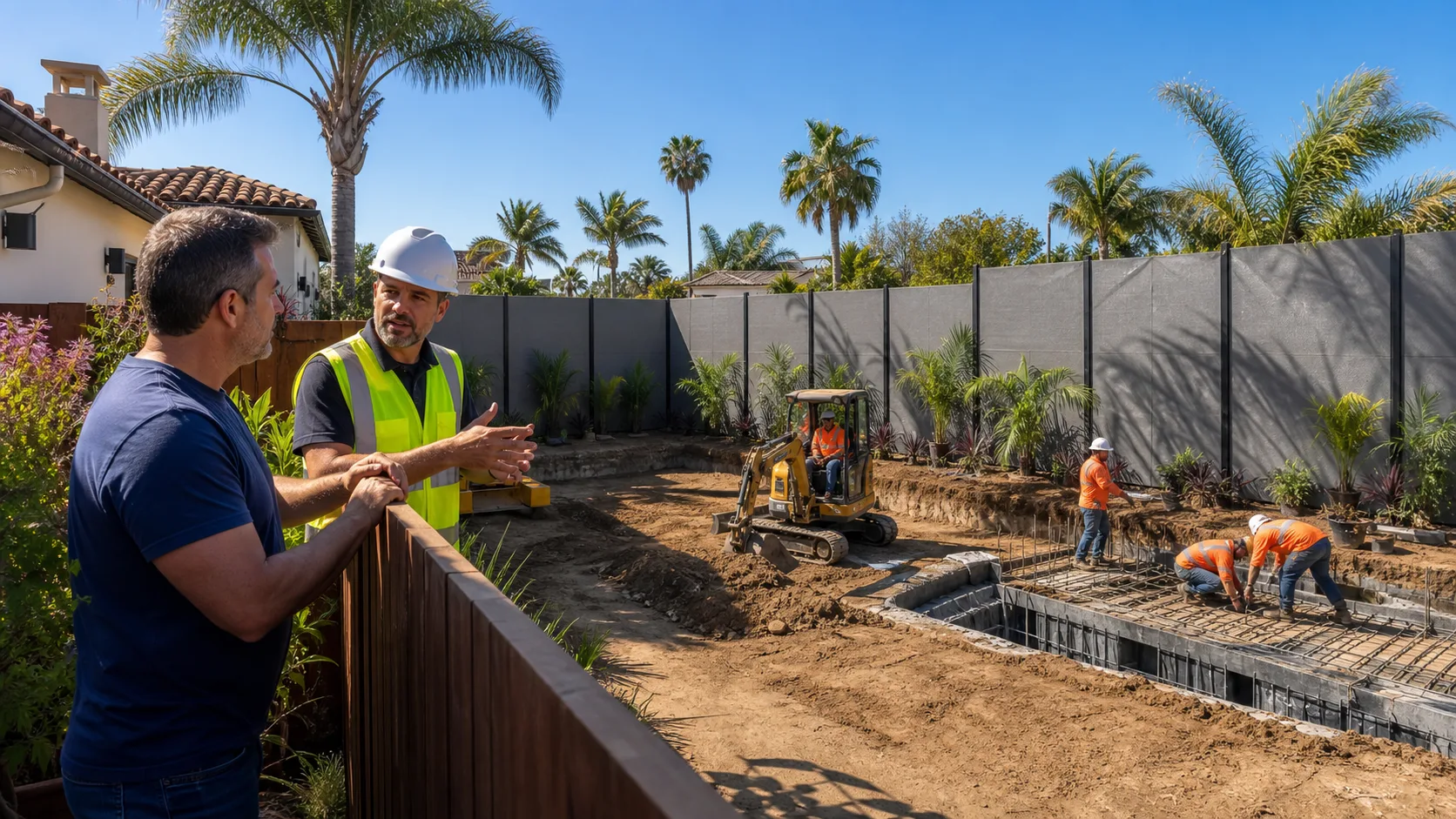
Key Takeaways
- Thoughtful planning and communication can dramatically reduce noise impact from pool construction in San Diego neighborhoods.
- Simple steps like smart scheduling, quieter methods where possible, and keeping neighbors informed go a long way.
- Working with an experienced, community-minded pool builder helps keep your project on track and your street calm.
Build Your Dream Pool Without Upsetting the Block
Pool construction in San Diego should end with happy splashes, not grumpy neighbors. A new pool or spa can totally change how you enjoy your home, but the noise along the way can surprise people on your street if no one plans for it.
In our coastal neighborhoods, like Encinitas and the rest of North County, homes sit close together. Sound carries. With some smart planning, clear communication, and a considerate builder, you can keep the project moving and keep the peace on your block at the same time.
Noise planning matters because it protects your relationships with the people who share your fence line. It also helps avoid complaints and delays that can stretch a project out. When everyone knows what to expect, a noisy season feels shorter, more manageable, and far less stressful.
Understanding Pool Construction Noise Before It Starts
The more you know about what is coming, the easier it is to explain it to your neighbors and set the right tone.
Here is what to expect in a typical pool build:
- Excavation: This is usually the loudest step. Large equipment digs the pool shape, and trucks haul dirt away. This part can last from a day to several days, depending on access and design.
- Steel and plumbing: Crews shape the pool with rebar and run pipes. There is noise from tools, but it is more on and off, not constant.
- Gunite or shotcrete: Concrete is blown into the shell. You will hear compressors, pumps, and steady equipment sounds. It is intense, but usually limited to a short window.
- Tile and coping: This phase is much quieter. You might hear saws and light hammering.
- Decking and concrete: Pouring and finishing the deck brings back louder equipment and concrete trucks, but for shorter bursts.
- Equipment installation and startup: Pumps, plumbing tie-ins, and system testing are usually mild on the noise scale.
Common sources of noise include excavators, jackhammers, concrete pumps, compressors, saws, and delivery trucks backing up. Some of these are required to meet safety and building standards. Others are chosen based on the tight backyards and narrow side yards we see around San Diego. Limited access can mean smaller machines that need more passes, which changes both the type and length of noise.
You cannot remove all noise, but you can shape when it happens and how long it lasts.
San Diego Noise Rules Homeowners Should Know
Every city around San Diego handles construction noise a bit differently, but most follow the same basic idea: loud work belongs in daytime hours, not early mornings or evenings.
In many parts of the county, there are set construction hours for weekdays, and more limited hours on weekends and holidays. Following those rules does more than just keep neighbors happy. It also helps protect you from code enforcement visits and possible fines.
Before work begins, it is smart to:
- Check your city’s noise and construction hour rules, especially if you live in Encinitas, Carlsbad, or the City of San Diego.
- Talk with your builder about how those rules will shape the daily schedule.
- Keep a simple calendar handy so you can explain to neighbors when loud work is allowed.
Permits and inspections are another piece of the puzzle. A permitted pool project comes with required inspections at different stages. Those inspections can affect scheduling of noisy tasks, like concrete work or gunite, since crews usually aim to line up work right after approvals.
By staying compliant and communicating about inspection days, you show neighbors that:
- The project is legitimate and permitted.
- The loud work has a clear end point.
- There is a plan, not random noise with no finish line.
Smart Strategies to Keep Construction Noise Down
Thoughtful scheduling is one of the most powerful tools you have. Even within allowed hours, you and your builder can choose times that respect daily life on your street.
A few simple scheduling tips help a lot:
- Plan the loudest work, like excavation and gunite, for mid-morning to late afternoon.
- Avoid very early starts or late finishes whenever possible.
- Ask close neighbors if there are special situations, like night-shift workers or at-home daycare, and see where minor adjustments are realistic.
- Cluster noisy tasks into fewer days, instead of spreading them lightly across many weeks.
Equipment choices and on-site habits also matter. Experienced builders can often shorten loud phases by using efficient methods and keeping equipment well maintained so it runs smoothly.
On the job site, noise-conscious habits include:
- Setting up temporary plywood barriers or using existing fencing and landscaping as sound buffers.
- Planning deliveries so trucks do not idle on the street longer than needed.
- Keeping the work area clear and organized so crews waste less time starting and stopping equipment.
- Giving clear instructions to the crew on start and end times for loud activities.
Taken together, these steps do not make the site silent, but they make the noise more predictable and more respectful.
Communicating with Neighbors and Choosing the Right Builder
Clear, early communication can turn a potential headache into a team effort. When neighbors feel included instead of surprised, they are usually far more patient.
Before construction starts, it helps to:
- Share your general pool design timeline and estimated construction calendar with the homes closest to you.
- Use a friendly printed note, a quick doorstep chat, or a simple get-together in the backyard.
- Include expected start and end dates, typical work hours, and a promise that you will respond quickly if concerns come up.
If someone raises a concern, stay calm and kind. Listen, thank them for sharing, explain the time limits you are working within, and see if there are any small changes that can help, like avoiding one specific nap time during the loudest day. It also helps to name one point of contact, either you or your project manager, so neighbors know exactly who to talk to.
Keeping people updated about especially noisy days, such as excavation, gunite, or major concrete pours, gives them a chance to plan errands or schedule quiet time away from home. Letting them know when the loud work is finished can feel like a small celebration for everyone.
Contractor choice plays a big role here. A seasoned local team that works in San Diego neighborhoods day in and day out understands access challenges, city rules, and how sound travels between close homes. Better planning and tighter coordination often mean fewer total days of noise, even if the volume level is about the same.
At DelRancho Pools, we are a third-generation, family-run pool company based in Encinitas, and we have spent years working in backyards throughout San Diego County. We help clients think through noise-sensitive schedules, set expectations with neighbors, and respond smoothly if anything changes mid-project. Because we handle custom pool and spa construction, remodeling, repairs, supplies, and weekly service, we know how to keep extra trips and rework to a minimum, which also keeps extra noise down.
Frequently Asked Questions About Pool Construction Noise
- How long is the noisiest part of pool construction in San Diego?
Most of the loud work, like excavation, gunite or shotcrete, and concrete or decking, typically happens over one to two weeks, depending on site access and design complexity. The entire project usually takes longer, but much of that later time is quieter finish work.
- Can I choose specific hours for loud work on my project?
Within your city’s allowed construction hours, many tasks can be scheduled around your street’s routine. Your builder can often group loud work into certain days and aim for mid-day windows, though weather, inspections, and concrete delivery times sometimes limit how flexible the schedule can be.
- What if a neighbor complains to the city about noise?
If you are working with a licensed pool contractor who follows permitted hours and local noise rules, you are usually in compliance. The city may still check in, but having posted permits, a clear schedule, and a cooperative attitude often helps resolve concerns quickly.
- Are there quieter equipment options for excavation or demolition?
There are some specialty tools and methods that can reduce vibration or constant noise, but excavation and concrete work will always create noticeable sound. A realistic plan is to use efficient, well-maintained machinery and keep the loudest phases as short as possible.
- When is the best time of year to start pool construction to reduce impact?
In San Diego, many homeowners like to start in late fall or winter. Neighbors tend to spend less time outside during school months and holiday prep, and this timing often positions your pool to be ready by late spring or early summer. Planning several months ahead with your builder helps line up the noisiest work with those less active backyard times.
Get Started With Your Project Today
Transform your backyard into a custom retreat with DelRancho Pools guiding you through every step, from design to the finishing touches. If you are ready to plan your dream pool, explore our pool construction in San Diego services to see how we can bring your vision to life. We will walk you through options that fit your space, style, and budget so you feel confident in every decision. Reach out today to start a straightforward, stress-free path to your new pool.