
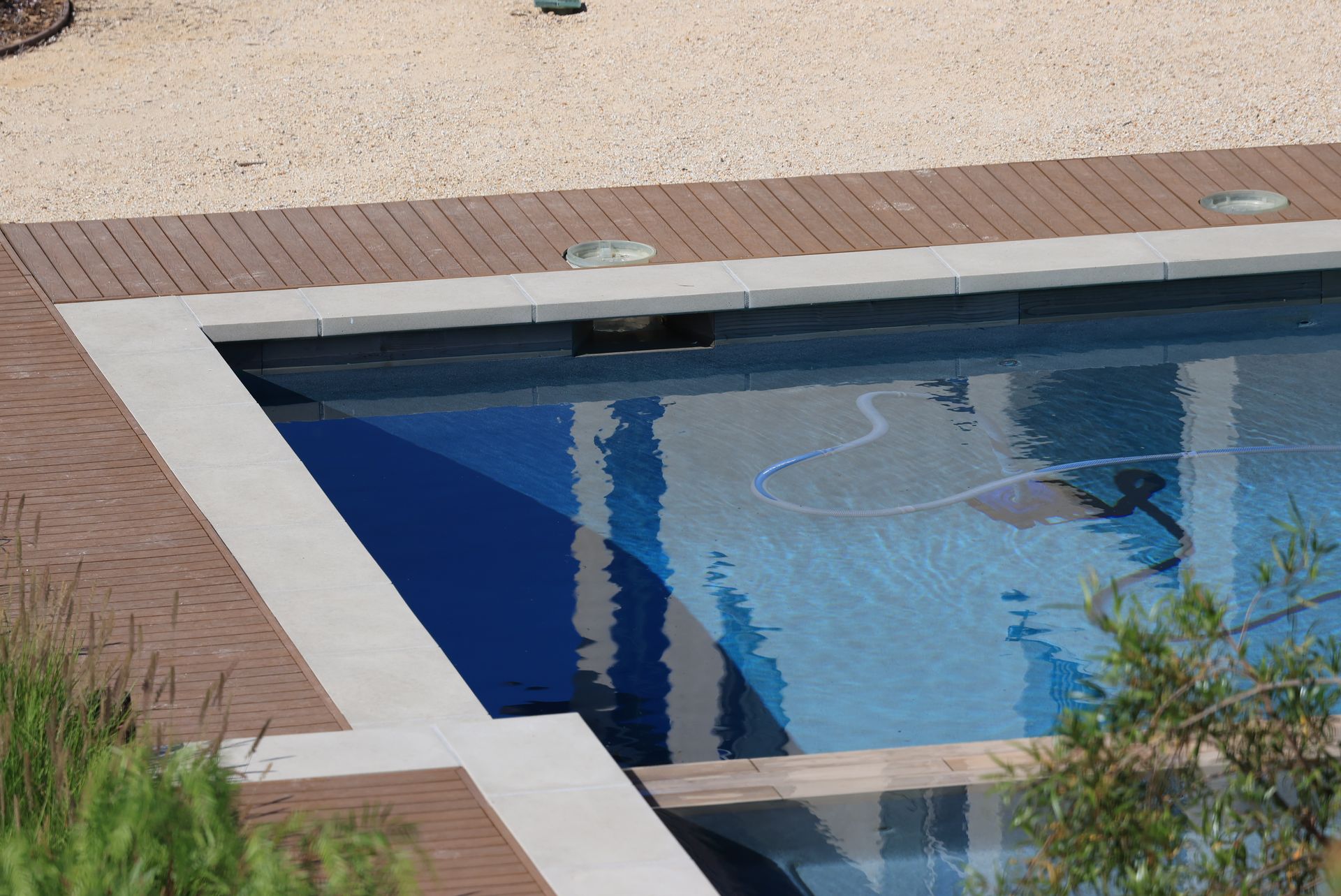
Key Takeaways
- Drought-smart pool care in San Diego can significantly reduce water use and lower utility bills.
- Managing evaporation, leaks, and chemistry helps extend the life of pool surfaces and equipment.
- Using covers, efficient equipment, and regular professional service supports long-term water savings.
- Local, climate-specific maintenance strategies are essential due to San Diego’s varied microclimates.
- A consistent, water-wise routine lets you enjoy clear, comfortable water while respecting drought conditions.
Key Takeaways for Drought-Smart Pool Care
Caring for a pool in San Diego means caring about water. Long dry stretches, summer water rules, and the cost of every gallon all make smart pool choices more important than ever. With a few changes, you can enjoy clear, comfortable water while using less of it and keeping your backyard looking great.
Here is what drought-smart pool maintenance can do for you:
- Lower water use and smaller water bills
- Pool surfaces and equipment that last longer
- Softer, more comfortable water for swimmers
As a family pool company based in Encinitas, we work with these conditions every day. Local know-how matters, because coastal pools and inland pools do not behave the same way. When you match your care plan to San Diego’s dry summers, your pool works with the climate instead of fighting it.
Why Drought-Smart Pool Maintenance Matters Now
San Diego is no stranger to dry years and summer limits on outdoor water use. By July, many homeowners face tight watering schedules and extra attention from the city on how much water they use outside. A pool that is not managed carefully can waste more water than most people realize.
Traditional pool habits often waste water through:
- Constant topping off when water drops a little
- Letting small leaks slide because the pool “always goes down”
- Backwashing too often or for too long
- Running fountains or waterfalls in the middle of hot, dry days
Ignoring drought-smart practices does more than waste water. Extra refills and harsh chemistry wear out equipment faster, fade finishes, and lead to more repairs. On top of that, you may see higher utility bills and, in some areas, the risk of penalties if your use looks excessive.
Smart Ways to Cut Evaporation and Control Water Level
Keeping your water level in the right range is a simple but powerful habit. For most standard pools, the water should sit about halfway up the skimmer opening. Higher than that, and the skimmer does not work well. Lower than that, and the pump can suck in air and get damaged.
Evaporation is a big deal in hot, sunny San Diego summers. A typical backyard pool can lose a noticeable amount of water each week from sun, wind, and dry air alone. If your pool is losing more than that, something else might be going on.
You can reduce evaporation with a few smart steps:
- Use a solar or safety cover when the pool is not in use
- Add windbreaks like fences, screens, or dense hedges around breezy sides
- Run waterfalls, bubblers, and deck jets less during the hottest hours
- Avoid overfilling, which makes splash-out worse during play
Even small changes, like covering the pool during a vacation or turning off water features at midday, can save a lot of water across a full summer.
Water-Saving Filtration, Cleaning, and Chemistry
Filtration and cleaning are not just about clear water; they are about keeping the water you already paid for. A clean, well-filtered pool needs fewer drain-and-refill fixes and fewer long backwash cycles.
Some water-wise ideas for filtration and cleaning:
- Keep filters clean and sized correctly so they work efficiently
- Consider cartridge filters, which usually need less backwashing than sand or DE filters
- Use a robotic cleaner so you can brush and vacuum less with the main system
- Skim the surface often to stop leaves and debris from sinking and breaking down
Chemistry plays a big part in saving water too. Balanced water lasts longer, feels better, and is easier on your equipment. When levels swing high or low, you may end up needing a partial drain to get things back in line.
Good target ranges many San Diego pools do well with in summer are:
- Chlorine: enough to keep water clear and sanitary without a strong smell
- pH: slightly on the basic side of neutral, so it is gentle on skin and eyes
- Alkalinity: in the middle range to keep pH from bouncing around
- Stabilizer (conditioner): enough to protect chlorine from sun, but not so high that chlorine stops working well
To get there with fewer chemicals:
- Test water at least once or twice a week in summer
- Add chemicals in small doses instead of big swings
- Have a professional service check and adjust levels regularly
Regular care from a pool service can help you avoid mistakes that lead to wasted water, like over-chlorinating or chasing problems with random chemicals.
Finding Leaks Early and Planning Smart Upgrades
Not every drop that disappears is evaporation. Catching leaks early is one of the best drought-smart moves you can make. In both coastal and inland neighborhoods, salt in the air, soil movement, and normal wear can create small cracks and loose fittings.
Common signs of a leak include:
- Water loss that keeps going even when the weather is mild
- Wet or soggy spots near pipes, equipment, or pool edges
- Bubbles or air in the pump basket or return lines
- Tiles or coping that shift or separate
Homeowners can do a simple bucket test. Set a bucket of water on a pool step, mark the water levels inside the bucket and in the pool, and compare them after a day or two. If the pool drops more than the bucket, you may have a leak.
When you suspect a leak, it is time for a professional inspection. Skilled leak detection and repair can save thousands of gallons over a season and protect the structure of your pool before small gaps turn into big repairs.
Some upgrades also help your pool work better in dry conditions. Useful options include:
- Variable-speed pumps that run slower and more efficiently
- Smart timers that let you run the system at cooler times of day
- Energy-efficient heaters that cut down on heat loss
For long-term drought-smart results, many owners also look at:
- Automatic covers that keep in heat and reduce evaporation
- Resurfacing materials that resist water absorption and chemical damage
- Plumbing and equipment layouts designed for smooth, efficient flow
Because San Diego has many microclimates, coastal pools often need different settings and covers than inland pools that face hotter, drier conditions. A local construction and service team can match upgrades to your specific backyard.
Quick-Start Actions for Drought-Smart Pool Care
If you want to start saving water this week, try a simple checklist:
- Check and adjust your water level to the correct height
- Turn down or reschedule waterfalls and features during hot midday hours
- Skim and empty baskets more often to keep debris out of the system
- Do a quick visual check for wet spots around equipment and pool edges
- Test chlorine and pH and write the readings down so you can see trends
- Use a cover at night or when you are not using the pool for a few days
For many homeowners, a weekly service plan keeps all these steps on track without guesswork. Regular visits help catch leaks, chemistry issues, and equipment problems before they turn into water loss.
FAQ
Q: Do Pools Waste More Water Than a Typical San Diego Yard?
A: A well-managed pool often uses less water than a thirsty lawn, especially when you cut evaporation and avoid leaks. Poorly managed pools, with constant refills and frequent draining, can use much more.
Q: How Often Should I Top Off My Pool in Summer Without Overdoing It?
A: Small top-offs every so often are normal in hot months. Instead of adding a lot at once, check the level at the skimmer and add only enough to bring it back to the proper height.
Q: Is It Better to Keep My Pool Full During Drought or Drain It?
A: Draining a pool can be risky for the structure and usually leads to a big refill later. In most cases, it is better to keep the pool full, covered, and well cared for so the same water lasts longer.
Q: What Are the Most Cost-Effective Water-Saving Pool Upgrades?
A: Many owners see good results from a quality cover, a variable-speed pump, and fixing known leaks. Cleaning up filtration and tightening chemistry also pay off over time.
Q: How Can DelRancho Pools Help with Ongoing Drought-Smart Pool Maintenance in San Diego?
A: As a third-generation, family-owned pool company in Encinitas, we provide construction, remodeling, repairs, weekly service, and a full-service pool and spa supply store. Our team can inspect your system, suggest water-wise upgrades, and set up a maintenance plan that fits your San Diego home and climate.
Get Started With Worry-Free Pool Care Today
If you are ready to enjoy a cleaner, easier pool experience, we are here to help with expert guidance and reliable service. Start by checking out our guide to pool maintenance in San Diego so you can avoid costly mistakes and protect your investment. At DelRancho Pools, we focus on practical solutions that fit your pool and your schedule. Reach out today so we can keep your water clear, safe, and ready to swim.