
Key Takeaways for San Diego Pool Owners
- Coastal storms, Santa Ana winds, and salt air in North County San Diego wear down pool finishes and metal parts faster than inland areas.
- Smart choices in plaster, pebble, tile, stone, and metal hardware help cut down on corrosion, efflorescence, and surprise repair work.
- Different materials handle salt air differently, so it pays to know the pros and cons before you build or remodel.
- Simple post-storm checks and water balance help protect your pool surface, tile, and equipment.
- A professional inspection is important if you see new cracks, rust spots, lifting tiles, or stubborn white stains after storms.
- Thoughtful, storm-ready pool construction in San Diego keeps your pool looking good and working well for many years.
Storm-Season Reality for Coastal San Diego Pools
Late summer and early fall in San Diego bring a mix of Santa Ana winds, surprise downpours, and sticky coastal air. For pools in Encinitas, Carlsbad, and nearby neighborhoods that means more debris in the water, faster swings in chemistry, and more stress on finishes and hardware.
After a storm, pools near the ocean often deal with:
- Windblown dust, leaves, and trash
- Salt-laden moisture sitting on stone, tile, and metal
- Diluted pool water from heavy rain that throws off balance
All of this speeds up wear on plaster, tile, grout, coping, and metal fixtures. That is why picking the right materials and finishes at the start, or during a remodel, makes such a difference for long-term durability along the coast.
Corrosion, Efflorescence, and Salt-Air Damage Explained
Corrosion is what happens when metals slowly break down. In a coastal area, salt in the air and rain collects on ladders, rails, light rings, and equipment. If pool chemistry is off, the water itself can attack metal too. Over time you might see pitting, rust stains on the plaster, or hardware that becomes weak or rough to the touch.
Efflorescence is the white, chalky, or crusty deposit that shows up on grout lines, tile faces, and stone. After storms, water can move through concrete, grout, or stone and bring dissolved minerals to the surface. When the water evaporates, those minerals stay behind as a white film or streaks. It does not just look bad; it can hint at trapped moisture and future cracking.
Along our coast, there is a special mix of marine layer, bright sun, and humid evenings. That mix can:
- Keep surfaces damp longer, feeding corrosion
- Heat finishes quickly during the day, then cool them at night, stressing joints
- Pull more minerals out to the surface, feeding efflorescence
So pools close to the ocean often age faster than pools with the same materials farther inland.
Building and Finishing Pools to Handle Coastal Storms
The strength of a pool starts with the shell. Good pool construction in San Diego’s coastal areas should focus on how concrete, steel, and waterproofing work together against salt and water.
Key structural choices include:
- Coastal-rated or well-protected steel rebar to slow down rusting
- Concrete mixes designed to resist chloride intrusion from salt air and water
- Quality waterproofing on the inside to keep moisture from soaking deep into the shell
Expansion joints, drainage, and subgrade prep around the pool matter just as much. If water sits under decks or behind tile, it can lead to:
- Cracks that open paths for more water
- Efflorescence showing up on coping and stone
- Rust pushing from inside the shell out to the surface
Working with local professionals who know North County soils and coastal behavior helps make sure the engineering matches the conditions in your yard.
Choosing Finishes, Decks, Metals, and Post-Storm Habits
Interior finishes are your pool’s first shield. Each type behaves differently after storms and chemistry swings.
Plaster, quartz, and pebble:
- Standard plaster: Smooth and classic, but more sensitive to poor chemistry, staining, and etching.
- Quartz: A mix of plaster and harder quartz aggregate, usually more stain resistant and longer lasting than plain plaster.
- Pebble: A textured surface made of exposed pebbles, generally very durable and forgiving of small chemistry ups and downs.
Tile choice matters too, especially on the waterline where sun, splash, and salts meet.
- Glass tile: Non-porous and great at resisting stains, but needs proper backing and grout.
- Porcelain tile: Dense and strong, handles salt air well when installed and grouted correctly.
- Ceramic tile: Can work, but not all ceramic is equal, and some types are more porous.
Good grout and sealers help cut down on efflorescence and keep tile lines cleaner. Darker or mottled finishes can also help hide minor stains or scale that build up over time between cleanings.
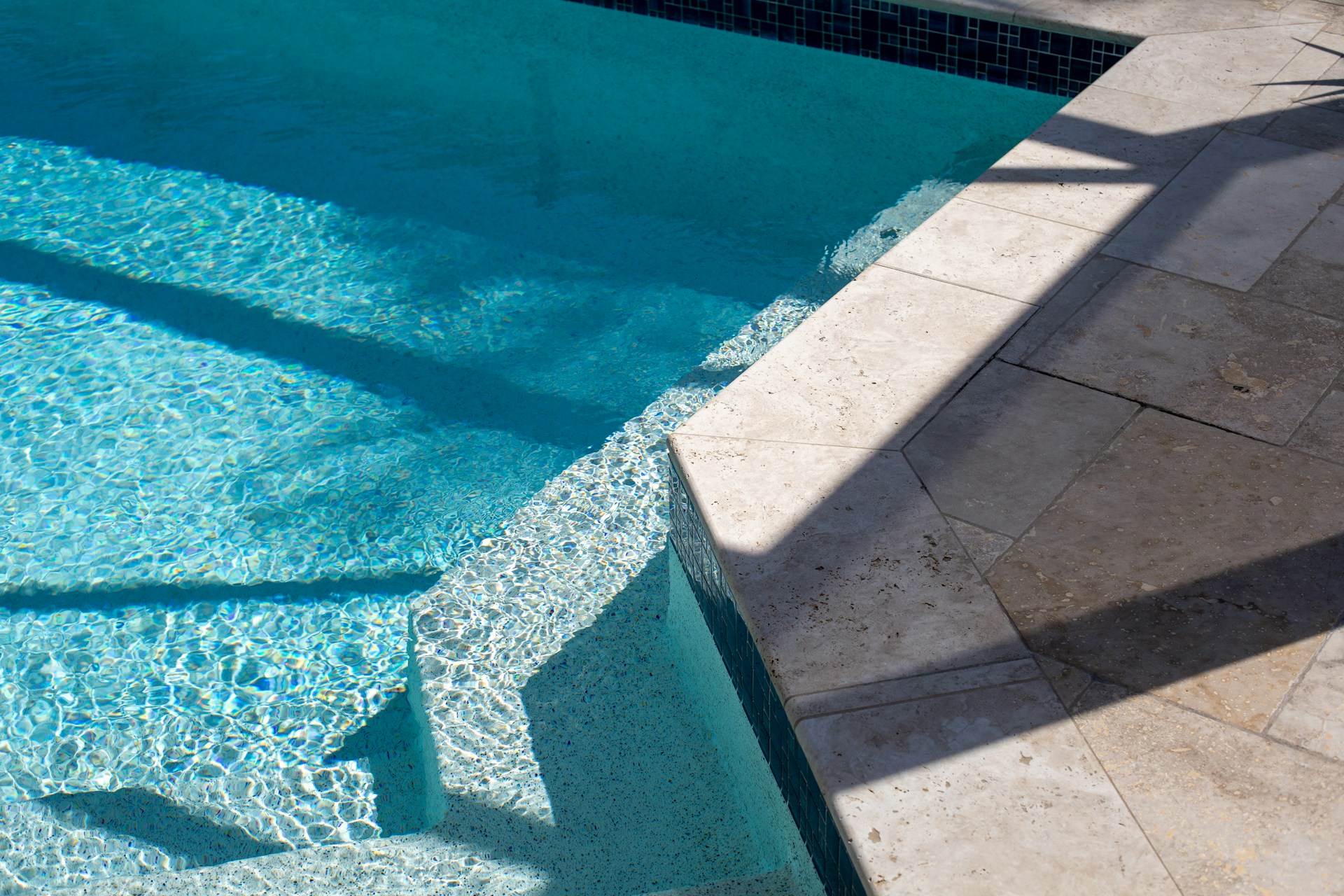
Around the pool, decking, coping, and stone are on the front line for rain and salt.
- Softer natural stones, like very porous flagstones, can flake, powder, and show heavy efflorescence.
- Denser stones and quality precast coping usually handle wet and dry cycles better.
- Decorative concrete and high-density pavers with the right sealer help block water, reduce tire marks from cleanup gear, and limit salt staining.
For coping, bullnose stone, precast concrete, or porcelain pieces that are set and jointed correctly can take on thermal movement, waves, and storm splash for a long time.
Metal parts and equipment also need special attention along the coast. Marine-grade stainless steel, coated metals, and corrosion-resistant screws and anchors are smart choices for:
- Handrails and ladders
- Light rings and escutcheon plates
- Fencing hardware and anchors near the water
Equipment pads should be placed where they are not constantly hit with direct salt spray or sitting water after storms. Raised pads, good drainage, and protective covers can give pumps, heaters, and controls a longer service life. When you remodel, it is often worth upgrading older hardware and equipment to more durable options designed for coastal life.
Right after a storm, a simple checklist goes a long way:
- Turn off power to pool equipment if there is standing water around the pad.
- Remove large debris from the pool and skimmers with care.
- Check water level and make sure it is not above the coping.
- Look for new cracks, popped or loose tiles, rust spots, or new white streaks.
Then, reset the water chemistry. Testing and balancing pH, alkalinity, and calcium hardness quickly helps prevent new stains, scale, and damage to plaster or tile. If you see recurring efflorescence, hairline cracks that keep growing, or rust that returns after cleaning, that is the time to bring in a professional team for a closer look and possible repair or remodel plan.
Frequently Asked Questions About Coastal Pool Durability
Question 1: How does living near the ocean change what materials I should use for my pool?
Pools near the ocean see more salt in the air, more humidity, and more wind-driven moisture. That means metals corrode faster and porous materials soak up more water. It is smart to choose marine-grade metals, denser stones, upgraded finishes like pebble or quartz, and well-installed tile and grout systems that are better at handling salt, sun, and wet-dry cycles.
Question 2: Can I prevent efflorescence completely, or just reduce it?
In many coastal pools, efflorescence can be greatly reduced but not always fully stopped. Good construction practices, proper concrete mixes, correct drainage, and careful tile and stone installation all help. Sealing and staying on top of water chemistry and surface cleaning also make a big difference in how often it shows up and how noticeable it becomes.
Question 3: After a major storm, what is the most important thing I should do first?
Safety comes first. Make sure there is no risk from electricity around the pool or equipment, especially if there is standing water. Then clear large debris from the pool and skimmers and check water levels. Right after that, test and balance the water chemistry to protect plaster, tile, grout, and equipment from rapid corrosion or etching.
Question 4: Is it worth upgrading finishes when I am already resurfacing my pool?
For many coastal homeowners, yes. When you are resurfacing anyway, stepping up to a more durable interior finish, better tile, and improved grout can mean fewer stains, better resistance to salt air and storms, and less frequent major work in the future. The finish you choose can also hide minor blemishes better and keep the pool looking fresh longer.
Question 5: How often should a coastal San Diego pool be professionally inspected?
Most coastal pools benefit from at least an annual professional inspection, and many owners prefer checks twice a year. Extra inspections after significant storms are helpful if you notice new cracks, stains, or lifted materials. Ongoing service and periodic assessments from an experienced local team help catch issues early and keep your pool ready for long, sunny seasons.
Get Started With Your Project Today
Transform your backyard into a custom retreat with DelRancho Pools guiding you from concept to first swim. If you are considering pool construction in San Diego, we will walk you through design, budget, and timeline so you know exactly what to expect. Reach out today so we can learn about your space, answer your questions, and outline a clear path to your new pool. Let us help you create a pool that fits your lifestyle and adds lasting value to your home.