

Key Highlights
- Extend your swimming season by choosing the right pool heating system for your swimming pool.
- A heat pump pool heater offers excellent energy efficiency by drawing warmth from the ambient air.
- Solar panels provide a highly economical and environmentally friendly way to heat your pool water.
- The best pool heater for you depends on your climate, pool size, and how often you swim.
- Using a pool cover is a simple yet effective way to retain heat and reduce energy costs.
Introduction
Do you wish you could enjoy your swimming pool for more than just the hot summer months? A pool heating system is the perfect solution to keep your pool water at a comfortable temperature all year round. With several different types of pool heaters available, it can be challenging to decide which one is right for you. Understanding the pros and cons of each option will help you make an informed choice that fits your lifestyle and budget, ensuring you get the most out of your pool.
Understanding Pool Heating Options in the United States
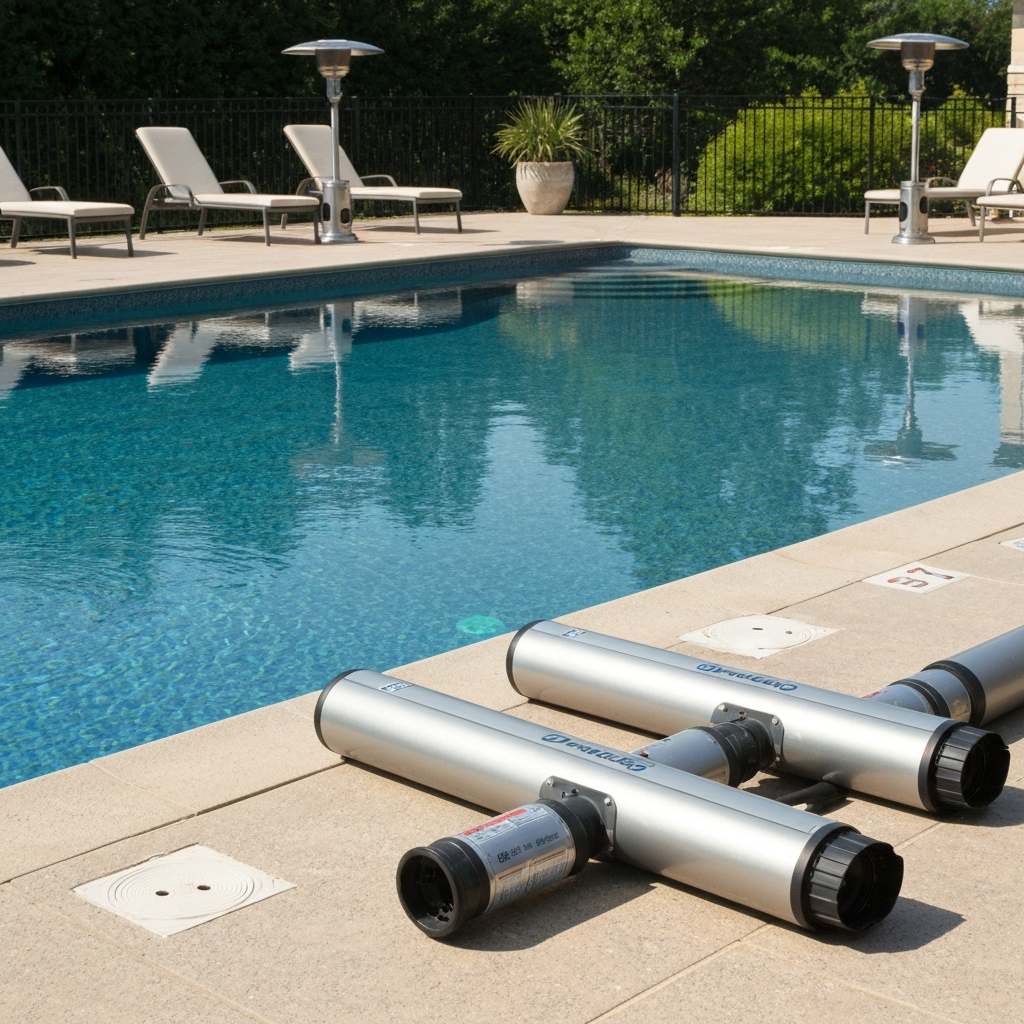
When it comes to pool heating in the United States, you have three main choices: gas heaters, electric heat pumps, and solar heaters. Each heating system operates differently and comes with its own set of advantages and disadvantages. The best pool heating option for your swimming pool depends on factors like your local climate and how you plan to use your pool.
Exploring these popular types of pool heaters will give you a clearer picture of their performance, costs, and efficiency. Below, we’ll look closer at heat pumps and solar systems, helping you decide on the right fit for your home.
Overview of Popular Pool Heaters (Heat Pumps, Solar)
The most popular energy-efficient heater types are electric heat pumps and solar heaters. A heat pump works by pulling heat from the surrounding air to warm the pool water. This method is highly efficient, especially in moderate climates. In contrast, solar panels use the sun’s free energy, pumping water through collectors to be heated before it returns to the pool.
While gas heaters warm up water the fastest, they are generally more expensive to run. For long-term savings and consistent temperature maintenance, electric heat pumps and solar heaters are often superior choices. Choosing the right pool heater depends on balancing initial cost with long-term operating expenses and your specific heating needs.
Here is a quick comparison of the main heater types:
| Heater Type | How It Works | Best For |
|---|---|---|
| Heat Pump | Uses ambient air to heat water. | Maintaining a consistent temperature in modest climates. |
| Solar Heater | Absorbs the sun’s energy via panels. | Sunny climates and homeowners seeking low operating costs. |
| Gas Heater | Burns natural gas or propane to heat coils. | Quickly heating pools or spas for occasional use. |
Comparing Pool Heating Technologies for Energy Efficiency
Energy efficiency is a major factor when selecting a pool heater, as it directly impacts your monthly utility costs. Gas pool heaters have the highest operating costs, with monthly bills potentially reaching several hundred dollars. They are powerful but consume a lot of fuel, making them less ideal for continuous use.
Pool heat pumps are significantly more efficient than gas heaters. They use electricity to transfer heat rather than generate it, which keeps running costs lower. Solar pool heating is the most energy-efficient technology of all. Once installed, a solar system uses your existing pool pump and free solar energy, resulting in almost no additional operating costs.
- Gas Heaters: High initial power but also high monthly utility costs ($200-$400).
- Heat Pumps: Moderate initial cost with lower running costs than gas ($100-$200 per month).
- Solar Heaters: Higher upfront installation cost but negligible operating costs.
How Heat Pump Pool Heaters Work
A heat pump pool heater functions much like a home’s central air conditioner but in reverse. The unit’s fan draws in warm ambient air and directs it over an evaporator coil. The heat from the air is then transferred to the pool water as it circulates through the heater, raising the pool water temperature before returning it to the pool.
Because this heating system relies on warmth from the outside air, it operates most efficiently when the air temperature is above 45-50 degrees Fahrenheit. This makes it an excellent choice for extending the swim season in many regions.
Key Benefits of Using Heat Pumps for Pool Heating
One of the greatest advantages of using a heat pump is its remarkable energy efficiency. Compared to gas heaters, electric heat pumps have significantly lower annual operating costs, making them an affordable way to consistently maintain your desired pool temperature. They don’t create heat; they simply move it from the air to your water, which requires much less energy.
Another key benefit is their longevity and low maintenance requirements. Heat pumps are built to last longer than gas heaters, providing reliable pool heat for many years. This durability, combined with their efficiency, results in a great long-term investment for any pool owner looking for luxury pool design and function.
- Low Operating Costs: Heat pumps are much cheaper to run than gas heaters.
- Long Lifespan: These units are durable and typically last longer than other heater types.
- Consistent Heat: They excel at maintaining a steady and comfortable pool temperature.
Ideal Situations for Heat Pump Installation
A heat pump pool heater is a fantastic choice for pool owners who live in climates where the air temperature consistently stays above 45-50°F. They are perfect for maintaining a warm pool water temperature throughout an extended swimming season rather than heating a cold pool quickly on demand. This makes them ideal for families who use their pool regularly.
These heaters are versatile and can be used for both inground and smaller pools, making them a great fit for various backyard pool ideas. For those with large pools, a heat pump is often more economical than a gas heater for keeping the water warm over long periods. However, they may struggle in colder climates during the winter months.
- Moderate Climates: Best for regions without freezing temperatures.
- Consistent Use: Ideal for pool owners who swim frequently and want to maintain a constant temperature.
- Large Pools: More cost-effective for heating large pools over an extended season compared to gas.
Solar Pool Heating Systems Explained
A solar pool heating system harnesses the sun’s natural energy to warm your pool. The system works by pumping pool water through a series of solar panels, often mounted on a roof. As the water flows through these collectors, it absorbs heat from the sun before returning to the pool.
This process continues until your pool reaches the desired temperature. The system is most effective when paired with a solar cover, which helps trap the collected heat and prevents it from escaping overnight. This simple, effective pool heating system is an eco-friendly way to extend your swim season.
Main Advantages of Solar Pool Heaters
The biggest advantage of solar pool heaters is that the fuel source—solar energy—is completely free. After the initial installation, there are virtually no additional utility costs, as the system typically uses your existing pool pump to circulate water. This makes solar heating the most cost-effective option over the long run for extending your swimming season.
In addition to the financial savings, solar heaters are incredibly environmentally friendly. They produce zero emissions, reducing your carbon footprint while you enjoy a warm pool. The solar panel systems are also durable and low-maintenance, with many lasting 15 years or more, providing decades of free pool heat.
- No Operating Costs: Uses free energy from the sun.
- Eco-Friendly: Produces zero harmful emissions.
- Durable and Low-Maintenance: Solar panels are built to last for many years with minimal upkeep.
Factors Affecting Performance and Installation of Solar Pool Heating
The performance of a solar pool heating system is directly tied to the amount of direct sunlight it receives. Therefore, they are most effective in sunny climates and may not be the best type of pool heater for homes in heavily shaded or frequently cloudy areas. The system will not generate heat at night or on overcast days.
Installation also requires a significant amount of space. A custom pool builder in San Diego will tell you that you typically need a solar panel area that is 75-100% of your pool’s surface area. The initial setup cost can also be higher than for other heaters. However, using a solar cover is crucial for efficiency, as it dramatically reduces heat loss, especially overnight.
- Sunlight Dependency: Requires ample direct sunlight to function effectively.
- Space Requirements: You need a large, sunny area (usually a roof) for the solar panels.
- Higher Initial Cost: The upfront investment for solar is typically more than for gas or heat pump heaters.
Choosing the Most Efficient Pool Heating Solution
Selecting the most efficient heating solution comes down to your specific circumstances. Consider your local climate, how frequently you use your pool, and your pool’s surface area. For maximum energy efficiency and low operating costs in a sunny climate, a solar pool heating option is hard to beat.
If you live in a more moderate climate and want to maintain a consistent pool temperature, a heat pump is an excellent choice. A professional can help you evaluate these factors to find the perfect type of pool heater for your needs.
What to Consider for Maximum Energy Savings
No matter which heating system you choose, the single most effective way to maximize energy savings is by using a pool cover. Approximately 75% of a pool’s heat loss occurs through evaporation. A solar cover acts as a physical barrier, trapping heat in the water and significantly reducing the need for your heater to run, which in turn lowers utility costs.
When planning for a new build with a pool construction San Diego expert or thinking about pool remodeling San Diego, integrating a cover is a smart move. Also, consider lowering the thermostat by a few degrees when the pool is not in use. Each degree you lower can save a substantial amount of energy.
- Use a Pool Cover: This is the best way to prevent heat loss from evaporation.
- Lower the Temperature: Reduce the thermostat settings when the pool is not in use.
- Run the Heater Selectively: Only heat the pool when you plan to swim.
- Maintain Your Equipment: A well-maintained heating system operates more efficiently.
Conclusion
In summary, selecting the right pool heating option can significantly impact both your enjoyment and the efficiency of energy use. Heat pumps offer a reliable and efficient method for maintaining comfortable water temperatures, while solar heating systems harness the power of the sun to provide an eco-friendly solution. Each method has its unique advantages and considerations, ensuring that there’s a suitable option for every pool owner. By assessing your specific needs and circumstances, you can make an informed decision that not only enhances your swimming experience but also aligns with your energy savings goals. If you have any questions or need assistance in choosing the best pool heating solution for your home, get in touch with us today!
Frequently Asked Questions
What are the key differences between heat pumps and solar heating systems for pools?
A heat pump uses electricity to pull warmth from the ambient air, making it great for maintaining a consistent pool temperature in moderate climates. In contrast, solar pool heating uses free energy from the sun via panels, offering high energy efficiency with no operating costs but depending entirely on available sunlight.
Are there any environmental benefits to choosing one pool heating option over the other?
Yes, solar pool heating is the most environmentally friendly option, as it uses renewable energy from solar panels and produces zero emissions. A heat pump is a close second, being far more eco-conscious than a gas heater, which burns fossil fuels in a combustion chamber and releases emissions.