
Key Takeaways for First-Time Pool Owners
- Realistic pool maintenance in San Diego means weekly cleaning, regular water testing, smart seasonal prep in fall and spring, and steady professional service.
- The biggest surprises for new owners are the time it takes, keeping water chemistry balanced, and handling our coastal climate and inland heat.
- A clear maintenance plan protects comfort, safety, and the long-term value of your home and pool.
- Local, experienced help from a third-generation pool company in North County can make pool care simple instead of stressful.
Why First-Time Pool Owners Feel Overwhelmed
Owning a pool in places like Encinitas, Carlsbad, or San Marcos feels like a dream. You picture calm mornings by the water and weekend pool parties. Then the first leaf storms hit, the water turns a little cloudy, and the pool equipment starts making a sound you have never heard before.
Many new owners believe pool care means skimming now and then and dropping in a chlorine tab. In reality, good pool maintenance in San Diego is a steady routine, not a once-in-a-while chore. You are working with sun, wind, debris, and water chemistry that all keep changing.
In this article, we walk through what new pool owners often miss: how our coastal and inland areas affect your water, why chemistry matters so much, what your equipment really needs, how fall and winter care work in our mild climate, and simple routines that keep your pool ready to swim.
The Hidden Realities of Pool Maintenance in San Diego
Pools along the coast do not behave the same as pools farther inland. Near the ocean, you are dealing with marine layer, fog, and salty air. That can mean:
- More wind-borne dust, leaves, and pollen in the water
- Extra organic debris that eats up chlorine faster
- Moist air that can affect metal parts and electronics over time
In hotter inland spots like Escondido or parts of San Marcos, you often see:
- Higher evaporation that changes water level faster
- Strong sun on the pool all day, which burns through sanitizer
- Warmer water that makes algae growth more likely if care slips
New owners are often surprised by the time side of pool care. A typical backyard pool can easily need:
- Weekly time for skimming, brushing, and basic checks
- Extra attention after windy days, storms, or heavy use
- Monthly focus on filters, deeper cleaning, and equipment checks
There are ongoing costs too, like chemicals, top-off water, and power for your pump and related equipment. When people ignore small signs, those costs can grow. Cloudy water, light stains on plaster, or a pump that sounds a little rough can turn into bigger repairs if they are ignored. Staying consistent is almost always cheaper and easier than waiting for an emergency.
Water Chemistry Mistakes That Shorten Pool Lifespan
Pool chemistry is not only about chlorine. There are a few key pieces that all work together:
- pH
- Total alkalinity
- Calcium hardness
- Sanitizer level, usually chlorine
- Stabilizer, also called CYA
San Diego water tends to be on the harder side, and our sun is strong. That mix can push pH and calcium out of balance, which can lead to scale, rough surfaces, and cloudy water if no one is watching it closely.
Here are common mistakes we see with first-time pool owners:
- Relying on chlorine tablets for almost everything, which can push stabilizer (CYA) too high and make chlorine less effective
- Ignoring pH and alkalinity, which can cause eye and skin irritation and damage plaster or equipment
- Only testing when the water looks off, instead of staying on a weekly schedule
When a professional handles your chemistry, the goal is to keep everything in a steady range, not just fix problems once they show up. Regular testing, logging, and small adjustments help prevent those stubborn issues like recurring algae, scale lines on tile, or cloudy water that never seems to clear.
With weekly pool service, chemistry gets adjusted gently as the seasons shift and as use changes. That kind of care keeps the water comfortable to swim in and helps your finish, tile, and equipment last longer.
Equipment Care That Many New Owners Overlook
Your pump, filter, and heater are the heart of your pool. They keep water moving, clean, and comfortable. When they are not set or cared for correctly, water quality and comfort suffer.
Running the pump too little is a common first-timer habit. It can save on power in the short run, but it often leads to cloudy water and more strain on the system. Running it at the wrong times can do the same.
Some equipment tasks that are often skipped or done wrong include:
- Cleaning or backwashing filters on the right schedule, and knowing the difference between sand, cartridge, and DE filters
- Emptying pump and skimmer baskets before they clog and stress the pump
- Watching for corrosion on heaters and automation, especially near the coast
A few simple checks help catch trouble early:
- Strange or loud pump noises
- Lots of air in the pump basket or at the return jets
- Weak water flow
- Heater error codes or failure to fire
Resetting a breaker or clearing a basket can sometimes solve a quick issue. But anything that involves wiring, gas, internal parts, or leaks should be handled by a trained repair pro for safety and to protect your equipment.
Seasonal Surprises: Fall and Winter Pool Care in SoCal
In San Diego, you do not shut down a pool for the season. The water may feel cooler and you might swim less, but the pool is still outside, catching debris, sun, and wind. Circulation and chemistry still matter year-round.
Fall brings leaf drop and Santa Ana winds in many North County neighborhoods. Pools can fill with leaves and dust almost overnight. That extra debris can:
- Clog skimmer baskets and filters
- Use up chlorine as it breaks down in the water
- Lead to stains if leaves sit on plaster too long
A bit of prep really helps:
- Adjust pump run times when you know heavy debris is coming
- Keep trees and shrubs trimmed away from the pool where possible
- Use a leaf net or cover at times if it fits your setup
Cooler water changes how chemistry behaves. You might use a little less sanitizer, but balance is still important. Good winter balance protects your plaster, tile, and equipment so you are not starting next swim season with stains, scale, or surprise repairs.
Smart Routines to Keep Your Pool Ready to Swim
Even if you work with a pool service, it helps to understand a simple weekly rhythm. A basic checklist for first-time owners looks like this:
- Skim the surface and brush walls, steps, and benches
- Keep an eye on baskets and remove leaves and debris
- Check water level and look for any odd sounds or leaks
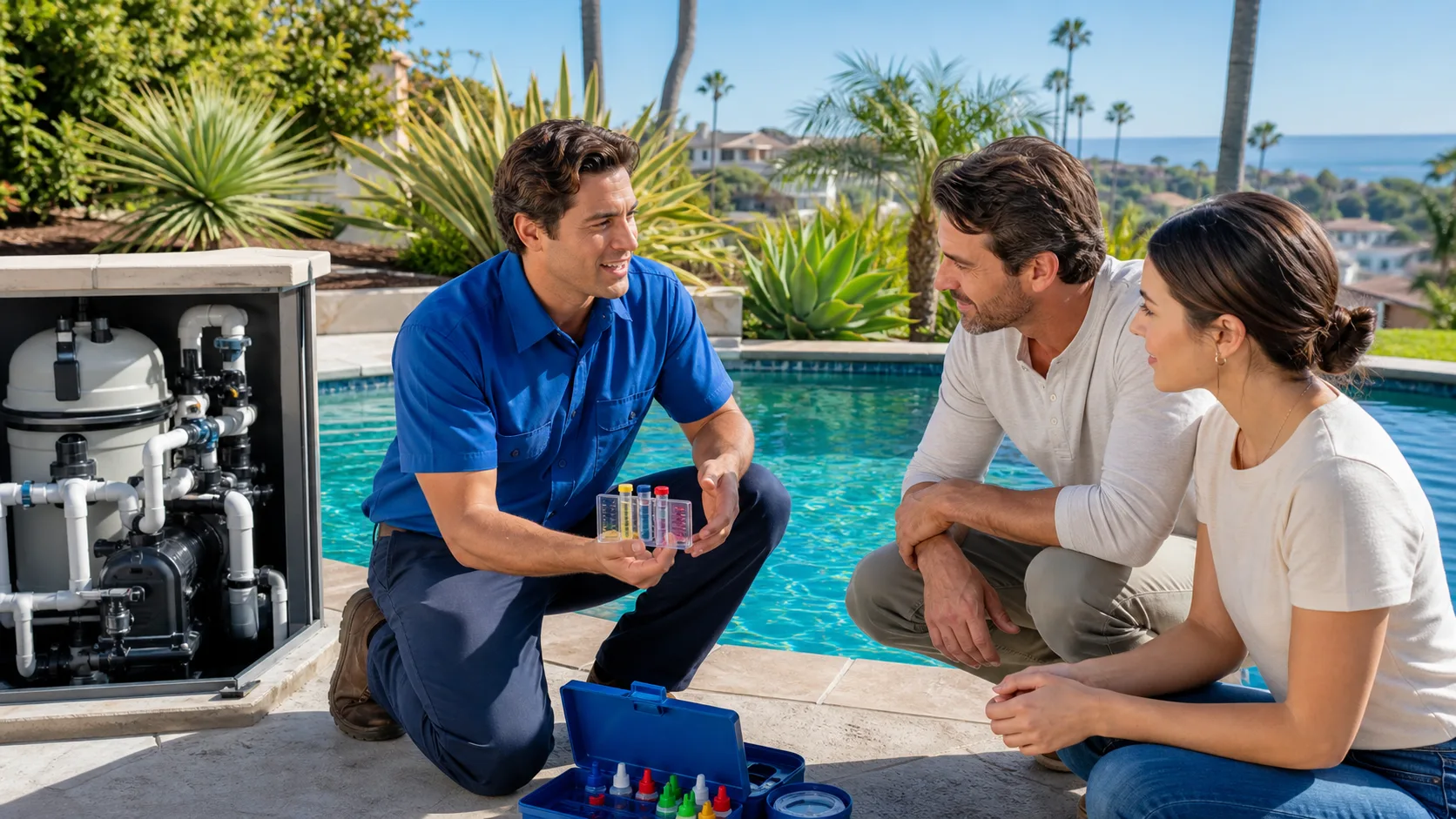
- Use a simple test kit to check chlorine and pH, and flag any big change
On a monthly or seasonal basis, it is smart to:
- Have filters cleaned and inspected
- Check seals, valves, and fittings for cracks or leaks
- Make sure timers and settings still match how you use the pool
- Plan a tune-up before heavy summer use and after storms or big parties
Many families find that professional weekly service takes a load off their plate. A pool expert can handle cleaning, testing, and fine-tuning and can spot issues long before they are obvious. That kind of help can fit different lifestyles, from full-service care to plans where the homeowner handles small tasks while the pro checks in on a set schedule.
Frequently Asked Questions About Pool Maintenance in San Diego
Q: How often should I run my pool pump in San Diego’s climate?
A: Most pools need at least one full water turnover a day. The exact run time depends on your pump, pool size, and season, but many owners run the pump several hours a day, with longer run times during warmer months and shorter in cooler periods.
Q: Do I really need weekly service if I do not use my pool every day?
A: Yes, use is only one factor. Sun, wind, leaves, and dust still affect the water, and chemistry keeps changing even when no one is swimming. Weekly care keeps the pool safe, clean, and ready whenever you want to use it.
Q: Is saltwater easier to maintain than a traditional chlorine pool?
A: Saltwater systems create chlorine from salt, which can feel softer on skin. They still need regular testing, balancing of pH and alkalinity, and equipment checks. Salt cells also need inspection and cleaning.
Q: How does the coastal environment affect my pool equipment and surface?
A: Salt air and wind-blown sand or dust can encourage corrosion on metal parts and can be tough on exposed equipment and finishes. Regular inspection, cleaning, and protective maintenance help reduce wear over time.
Q: What should I do before a big storm or Santa Ana wind event?
A: Clear loose items from around the pool, empty baskets, check filter pressure, and make sure your pump timer and settings are correct. After the event, skim debris, clean baskets again, and have a professional review chemistry and equipment if anything seems off.
Protect Your Pool Investment With Expert Local Care
If you are ready to avoid costly repairs and keep your backyard oasis in top shape, let DelRancho Pools handle the hard work for you. Our experienced team understands the unique challenges of pool maintenance in San Diego, from water chemistry to sun exposure and seasonal use. We will help you create a maintenance plan tailored to your pool so you can enjoy clear, safe water all year long. Reach out today to schedule your next service and relax knowing your pool is in reliable hands.