
Key Takeaways
- You can keep the soul of a vintage pool while updating safety, comfort, and efficiency.
- Matching old tile, coping, and decking often means special sourcing and careful design.
- A phased pool renovation in San Diego started in fall can be finished in time for spring and summer.
Preserve Your Vintage Pool Without Losing Its Soul
If you live in an older San Diego home, your pool is probably a big part of its story. The curves, the tile, the way the deck lines up with the house, all of that gives your backyard real character. When that pool starts to show its age, you do not have to trade that charm for a brand new look that does not fit your home.
Many homeowners in classic coastal neighborhoods like Encinitas, La Jolla, and Point Loma are choosing restoration instead of replacement. They want safer, easier-to-run pools, but they also want to keep their original tile lines and old-school style. As a third-generation, local pool company, we understand both the historic look and the modern systems that make a pool easier to own.
Fall is a smart time to start a thoughtful pool renovation in San Diego. Kids are back in school, most big pool parties are behind you, and there is enough daylight for steady work. It also gives tile, plaster, and decking time to cure and settle before you are ready to host again in spring and early summer.
Reading Your Pool’s History Before You Renovate
Before anyone starts chipping tile or cutting concrete, it helps to read your pool’s “era.”
- Mid-century modern pools often have clean lines, straight runs of waterline tiles, and simple white or light blue interiors.
- Ranch and Spanish Revival styles may include curved shapes, steps with rounded edges, and warm-toned tile or brick.
- Mediterranean-inspired designs often bring in natural stone, ornate tile bands, and more decorative coping.
You can learn a lot by looking at tile patterns, coping edges, deck joints, and how the pool connects to the house. When we understand what the original builder was going for, we can make choices that respect that intent instead of guessing.
Next comes deciding what to save and what must go. A professional inspection separates surface aging from true problems. Faded tile or small cracks can often be repaired. But issues like hollow spots, loose coping, failing equipment, or non-compliant drains usually call for deeper work.
Elements often worth preserving include:
- Unique glass or ceramic mosaic tiles
- Hand-formed concrete steps or benches
- Vintage metal or brass fixtures
- Original waterfalls or raised bond beams
Some parts simply have to be replaced, like unsafe skimmers, rusted-out rebar, or undersized plumbing. The key is doing that work in a way that hides modern fixes inside a familiar look.
We also need to respect local rules. Pool renovation in San Diego means following safety barrier rules, drain entrapment standards, and energy-efficiency requirements. In coastal and HOA neighborhoods, there can be extra limits on finishes or fences. Having a local team that knows both the codes and the traditional styles can make the process smoother and less stressful.
Matching Vintage Tile, Coping, and Decking Like a Pro
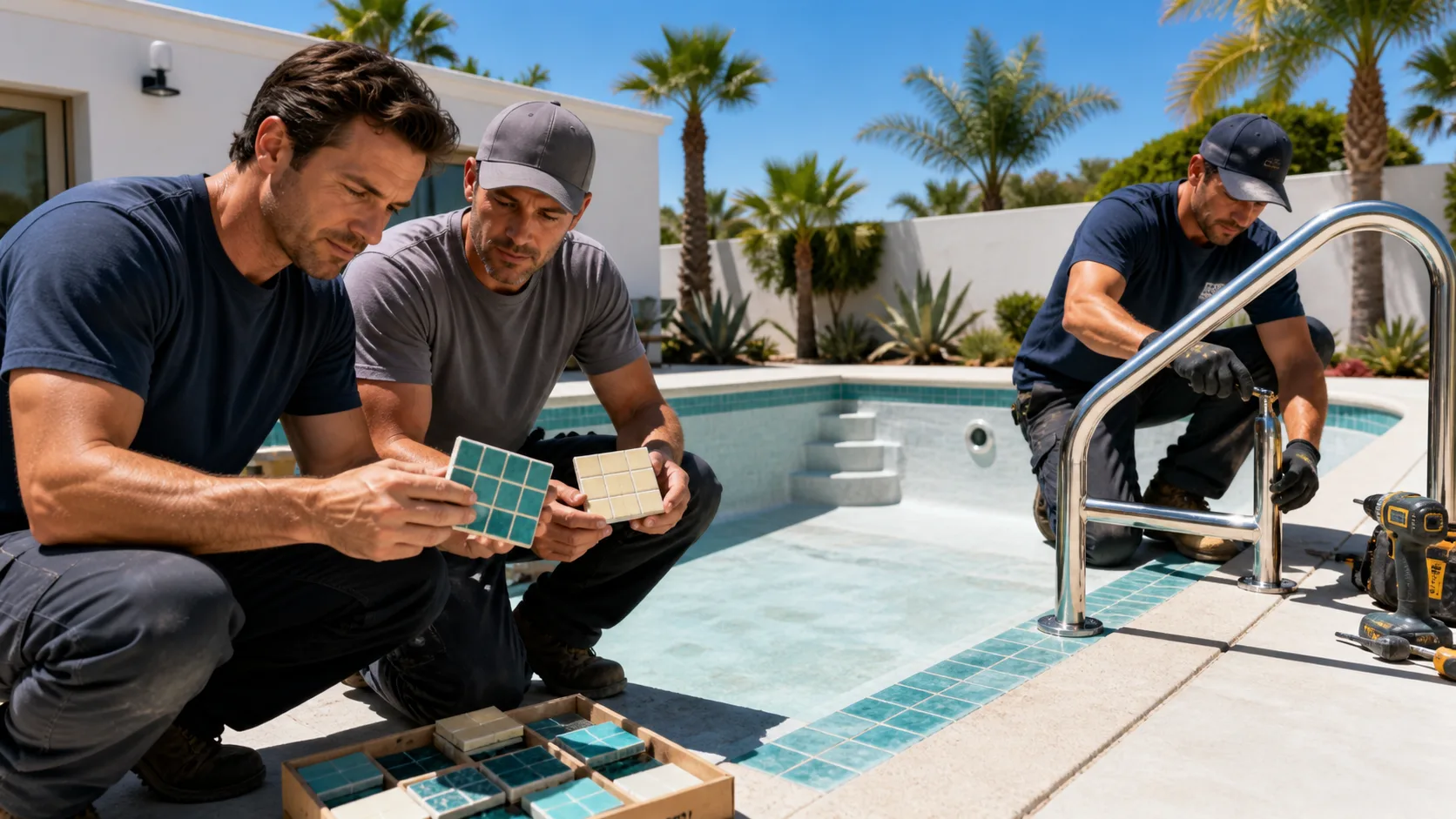
Matching old tile is one of the trickiest parts. Many vintage patterns are no longer made, so we look at several options:
- Tile salvage yards and national reuse networks
- Small-batch makers who can produce similar shapes and colors
- Hand-painted or custom-printed reproductions for special features
Often we suggest blending old and new in a way that feels planned. For example, we might keep original tile on a raised wall and use a carefully chosen new tile band at the waterline, or use new tile only on steps and benches for safety. Water chemistry, sun exposure, and the type of glaze all change how the color reads under water, so we plan with that in mind.
Coping is another big clue to a pool’s age. Common historic coping styles around San Diego include bullnose concrete, saltillo or other Mexican pavers, brick in a “soldier course” layout, and simple natural stone slabs. Modern materials can be shaped to match those older profiles but offer better durability and comfort under bare feet. Paying close attention to small things like edge softness, overhang depth, and color tone is what makes new coping feel original, not like a close copy.
Decking upgrades should be respectful, not a total reset. Often we:
- Repair or resurface old slabs while keeping the original pattern of joints
- Color match a new pour to older concrete or brick
- Add inlay bands or borders that echo details on the house
Materials that age gracefully around older homes include exposed aggregate, broom-finished concrete, clay brick, and tumbled pavers. At the same time, we improve drainage to keep water away from foundations and add slip-resistant textures, all without pushing the deck toward a high-gloss resort look that fights with a classic house.
Hidden Upgrades: Safety and Efficiency Behind the Scenes
The best upgrades in a historic-style pool are often the ones you do not see. New equipment like variable-speed pumps, efficient filters, and smart controls can usually live in the same equipment area you already have, just arranged more neatly. We aim for quiet, low-profile setups so you hear the water, not the pump.
Lighting is another big win. warm-white LED retrofits can replace old bulbs while keeping that soft, classic glow at night. You get lower energy use and longer life without the harsh color of some modern lights.
Safety updates are non-negotiable, but they do not have to scream for attention. For most pool renovation in San Diego projects, we look at:
- VGBA-compliant main drains and anti-entrapment covers
- Updated handrails and ladders with finishes that match other metals on the property
- Low-visual-impact barriers, like clear panels or simple metal in colors that blend in
- Slip-resistant finishes on steps and tanning ledges in earthy or soft blue tones
We can also build in smart energy and water savings. Efficient heaters or heat pumps work well in our mild climate, especially with solar setups. Better circulation design and pipe sizing help water move more smoothly, which can reduce chemical use and evaporation. Optional add-ons like automatic covers or water-level controls protect your finishes and keep your pool easier to care for over time.
Balancing Seasons, Budget, and Project Phasing
Fall is a natural time to start work. The big summer rush is over, backyard schedules calm down a bit, and there is room in the calendar for a full project from tile chipping to final fill. That timing also works well for specialty materials, since custom tile or coping can require extra lead time.
To keep things manageable, we often help homeowners break projects into phases:
- Phase 1: Safety and structure (drains, plumbing, equipment, structural repairs)
- Phase 2: Interior finish and tile repair or replacement
- Phase 3: Decking, coping refinements, water features, and extras
This avoids random “one-off” fixes that slowly erase the original character. With a clear plan, you can tackle the must-do items now and save the nice-to-have upgrades for a future season, without losing the overall design thread.
Setting expectations matters too. Historically sensitive work can include design discussions, material sampling, and permitting before construction even starts. Once work begins, many projects run for several weeks, depending on depth of repair and custom orders. A realistic schedule, a little contingency in your budget, and open communication with an experienced pool team go a long way toward protecting both your home and your peace of mind.
FAQs About Historically Sensitive Pool Renovations
- Can I keep my original tile if some pieces are cracked or missing?
Yes, in many cases you can. A professional can stabilize, clean, and re-grout existing sections, then source or custom-make close matches for missing pieces. By placing new tile in bands or accent areas, repairs feel intentional instead of patched.
- Will bringing my old pool up to code change how it looks?
Some updates, like compliant drains or new skimmers, are mostly invisible once the pool is filled. Items like handrails or fencing can be chosen in styles, shapes, and finishes that fit your home’s era, so they blend in instead of standing out.
- How long does a historically sensitive pool renovation in San Diego usually take?
Timing depends on scope, but many projects take several weeks from the start of construction, plus extra time for design and any required permits. Custom tile or coping often adds lead time, which is why planning ahead for a fall start works well.
- Is it more expensive to match vintage materials than to modernize everything?
Matching or recreating vintage elements can cost more up front than picking standard finishes. But keeping distinctive details can protect the overall look of your home and reduce the urge for another big remodel later. A good plan helps decide where to be authentic and where a simpler option is fine.
- Can I add modern features like a spa or baja shelf without ruining the original design?
Yes, if they are carefully designed. A spa or baja shelf can follow the same curves, coping style, and tile choices as the original pool. When shape, scale, and materials line up with the existing design, new features feel like a natural evolution, not an add-on.
Get Started With Your Project Today
If your pool is showing its age or no longer fits your lifestyle, we are ready to help you reimagine it from the ground up. At DelRancho Pools, our experienced team will walk you through design options, materials, and upgrades so your backyard feels new again. Explore how our pool renovation in San Diego can improve the look, safety, and efficiency of your pool. Reach out today so we can discuss your goals and create a renovation plan that fits your home and budget.