
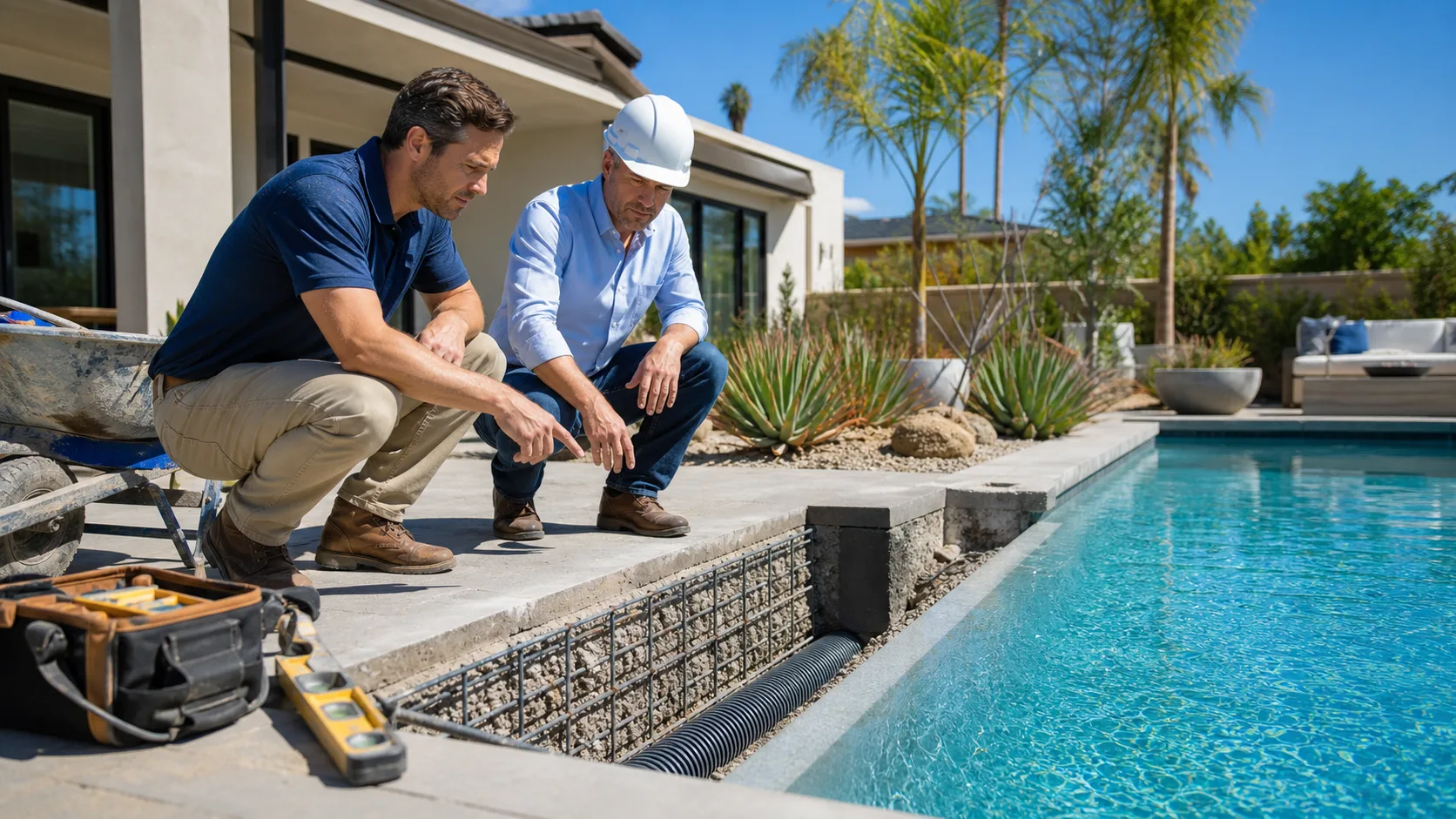
Key Takeaways: Building a Pool That Truly Protects Your Home
A pool should do more than look pretty in your backyard. When it is planned and built the right way, it can help protect your home, your yard, and your investment for years.
Here are the big ideas to keep in mind for pool construction in San Diego:
- Protection matters because poor planning can lead to drainage problems, soil movement, and stress on your house and hardscape.
- Smart design, engineering, and material choices all work together to keep water away from your home and support the soil around it.
- The right questions before you sign a contract can prevent expensive surprises later.
- Planning with San Diego’s fall rains, shorter daylight, and long summers in mind keeps your pool ready almost year-round.
- This guide is helpful if you are planning your first custom pool or spa, thinking about a major remodel, or living on a slope, near a bluff, or on a tight lot with tricky drainage.
How Smart Pool Design Protects Your Property
Before anyone brings in a Bobcat, the yard needs a real look. A good site assessment checks:
- The grade or slope of your yard
- Soil type and how firm it is
- Existing patios, walkways, and walls
- Neighboring yards and where their water flows
Water always wants to follow gravity. When you add a pool, you change how water runs across and under your yard. In San Diego, coastal soils, older neighborhoods, and narrow side yards can make that even more important to study before digging.
Design is not just about style. Pool shape, depth, and placement all affect how close the structure comes to your home’s foundation and any nearby walls. Safe design often includes:
- Proper setback distances from the house and property lines
- Retaining walls where soil needs support
- Safety barriers that guide traffic and protect entry doors and windows
Features like spas, tanning shelves, and raised water features add weight and water load. They need to be placed where your yard can handle them without putting extra pressure on your house or your neighbor’s yard.
Good design also thinks about how you actually live. We look at:
- Where the sun hits in the morning and afternoon
- Where you want shade for long summer days
- Privacy from neighboring windows
- Wind direction and how it moves surface debris
Traffic flow from your back door to the pool should feel natural and safe. That means fewer sharp turns, slip-resistant paths, and simple ways to move food, towels, and kids without cutting across risky wet spots. Planning now for kids, guests, aging family members, and possible resale keeps your pool an asset for the long term.
Engineering Peace of Mind Into Pool Construction
You may only see the water and tile, but the hidden structure does the real work. A well-engineered shell cuts down on cracking, leaking, and constant repairs. Key parts include:
- Correct rebar size and spacing
- The right concrete strength for local soils
- Extra attention where the pool transitions to a spa or raised wall
On hillsides, slopes, or close to coastal bluffs, a geotechnical report can guide how deep to go, how to support the soil, and where to add extra steel or support. This step helps your pool and yard work with the land instead of fighting it.
Water management is where many projects go wrong. Good pool construction in San Diego should always plan how to keep water from collecting near your house. That usually includes:
- Proper deck slope so water drains away from buildings
- Drains or French drains where water might pool
- Grading that sends water to safe collection areas
Fall and winter storms can bring quick, heavy rain. The right drainage keeps that water from flooding your patio, backing up against your foundation, or running onto your neighbor’s property. Local standards also expect you to keep runoff controlled, so planning this early prevents problems later.
Equipment choices protect your investment too. Pumps, filters, valves, and plumbing sized correctly for your design help avoid strain and premature failure. Automated systems can:
- Shut things down if water is too low
- Help prevent overflows
- Alert you if something is off before it becomes an emergency
Smart controls let you keep an eye on your system even when life gets busy, which helps protect both the pool and the areas around it.
Materials, Finishes, and Decking That Really Last
San Diego’s mix of strong sun and salt air can be tough on finishes. When we talk about plaster, pebble, or tile, we look at how each handles:
- UV exposure
- Temperature swings from day to night
- Long seasons of regular use
Deck materials also matter for both comfort and safety. Slip-resistant surfaces and materials that manage heat well are important for bare feet during long sunny days and evening get-togethers in fall. We match materials to how much maintenance you want to handle and how you plan to use the space.
Your home’s foundation and existing hardscape need protection too. Smart details include:
- Expansion joints so concrete can move slightly without cracking everything around it
- Proper coping that helps manage water at the pool edge
- Separate pool decks that do not lock directly into your house slab
These choices help keep the pool structure and the home structure from pulling on each other when soil shifts or temperatures change. Sloped decks and careful drain placement also keep water from heading toward your home, garage, or side yards.
Small details prevent big headaches later. For example:
- Tile choices that hide or reduce calcium buildup at the waterline
- Skimmer and return placement that supports clean circulation and less debris
- Lighting, handrails, and steps that make nighttime and shoulder-season use safer and more comfortable
Remodeling Older Pools to Safeguard Your Home
With older pools, the trouble is not always just how they look. Signs that the pool might be stressing your property include:
- Cracks that keep returning after patching
- Decks that have lifted, tilted, or pulled away
- Wet spots in the yard that never fully dry
- Noticeable water loss that might point to a leak
Modern pool construction in San Diego can correct many shortcuts of the past. Sometimes a careful repair is enough. Other times a deeper remodel or even full reconstruction protects the home better over the long run.
Helpful upgrades often include:
- Adding or improving drainage around the pool and deck
- Updating plumbing lines and equipment for better flow and efficiency
- Rebuilding decks and coping to relieve pressure on nearby slabs or walls
- Adding structural support for pools near slopes, property lines, or older retaining walls
If you want to use your pool and spa more in fall and winter, safe upgrades like heaters, covers, and well-placed lighting help. Year-round safety features such as fencing, self-closing gates, and safety covers add peace of mind. Updated maintenance routines and modern systems can lower the chance of algae, slick surfaces, and tricky water balance that might damage surfaces or nearby concrete.
Working with a Local Expert and FAQs
Local experience in San Diego really matters. City and county rules are there to protect homeowners, and they change over time. A builder who works across coastal, inland, and hillside areas understands how different soils and drainage patterns affect design. A third-generation, family-owned company like DelRancho Pools is focused on long-term quality, because our name is on every project we build and care for.
Before you sign anything, it helps to ask:
- How do you study drainage and soil conditions on my property?
- What structural and safety measures are included as standard, not as extras?
- How will the design protect my home, my neighbor’s property, and existing structures?
- What ongoing service options help keep the pool and yard in good shape?
Starting in fall often works well. There is time to design, build, and allow concrete and finishes to cure so your backyard is ready for heavier use when days get longer.
FAQs about pool construction that protects your home:
Q1: How does pool construction in San Diego differ from other areas?
A1: Local soils, coastal conditions, and hillside neighborhoods mean drainage, grading, and structural planning need extra care. Rules about runoff and setbacks also shape how we design and build.
Q2: Can a pool damage my home’s foundation if it is too close?
A2: It can if it is not designed correctly. Proper setbacks, engineering, isolated decks, and, when needed, retaining walls or foundation reviews help keep your home and pool working together safely.
Q3: What should I budget for a safe, well-built custom pool?
A3: Costs depend on size, access, soil conditions, and finish choices. The important part is not cutting corners on structure, drainage, or equipment, because those are the pieces that protect your property over time.
Q4: How long does quality pool construction typically take?
A4: Timelines vary with design complexity, approvals, and site conditions. A typical project runs through design, engineering, permits, excavation, steel, plumbing, shotcrete, decking, finishes, and startup, often planned so heavy work finishes before peak swim season.
Q5: How do I maintain my pool so it continues to protect my property?
A5: Consistent water chemistry, regular equipment checks, and early leak detection are key. Many homeowners choose professional weekly service so small issues are caught before they affect the structure, surrounding decks, or nearby buildings.
Get Started With Your Project Today
If you are ready to transform your backyard into a space you can enjoy for years, our team at DelRancho Pools is here to help. We will walk you through design, materials, and construction so your new pool fits your home, budget, and lifestyle. Learn more about our approach to pool construction in San Diego and discover what is possible for your property. Reach out today to discuss your ideas and schedule a consultation with our specialists.